20 Stunning Patio Door Design Ideas That Transform Your Home’s Indoor-Outdoor Flow
A complete guide to sliding doors, French doors, bifold walls, and everything in between — for every home style and budget.
There’s something almost magical about a patio door done right. You step into the living room, and instead of hitting a wall, your eye travels straight out to the garden, the deck, or the backyard sky. The room feels bigger. The light feels better. The whole house breathes differently.
But here’s the thing — most people don’t realize how much their patio door (or lack of the right one) is holding their home back. An outdated sliding door with a chunky white frame, a stuck track, or cloudy glass can silently kill the entire aesthetic of an otherwise beautiful room.
So whether you’re in full renovation mode or just dreaming about future upgrades, these 25 patio door ideas will give you real, actionable inspiration. We’re covering everything from sleek frameless glass walls to budget-friendly refreshes that cost almost nothing. Let’s get into it.
What to Consider Before Choosing a Patio Door Design
Door Type vs. Your Space Size
Not every door style works in every space. Sliding doors are perfect for tight areas where a swinging door would eat into your room. French doors need clearance on both sides — they’re beautiful, but you need the square footage. Bifold and accordion-style doors are ideal for wide openings where you want to completely dissolve the wall between inside and out.
Think about traffic flow, too. If the patio is your main entertaining route, a wide opening makes a huge difference.
20 Patio Door Design Ideas for Every Style & Budget
1. Floor-to-Ceiling Sliding Glass Doors
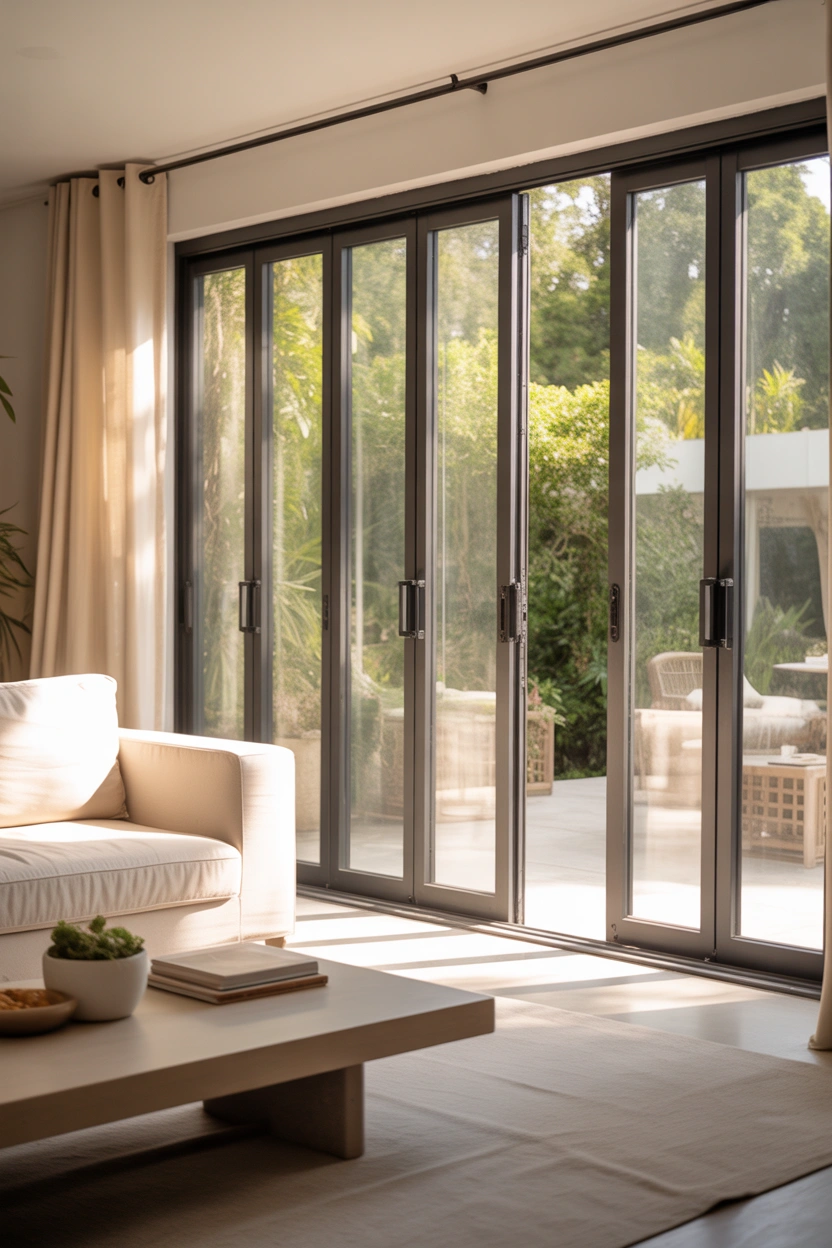
If you want one change that makes your home look instantly more luxurious, this is it. Floor-to-ceiling sliding glass doors replace the typical “window above, wall below” situation with pure, uninterrupted glass from top to bottom. The effect is almost cinematic — your backyard becomes living wall art.
These work especially well in living rooms and dining areas. Pair them with slim matte black aluminum frames, polished concrete floors, and minimal furniture, and you’ve created the kind of space that ends up on Pinterest mood boards. The natural light alone will change how you feel in the room every single morning.
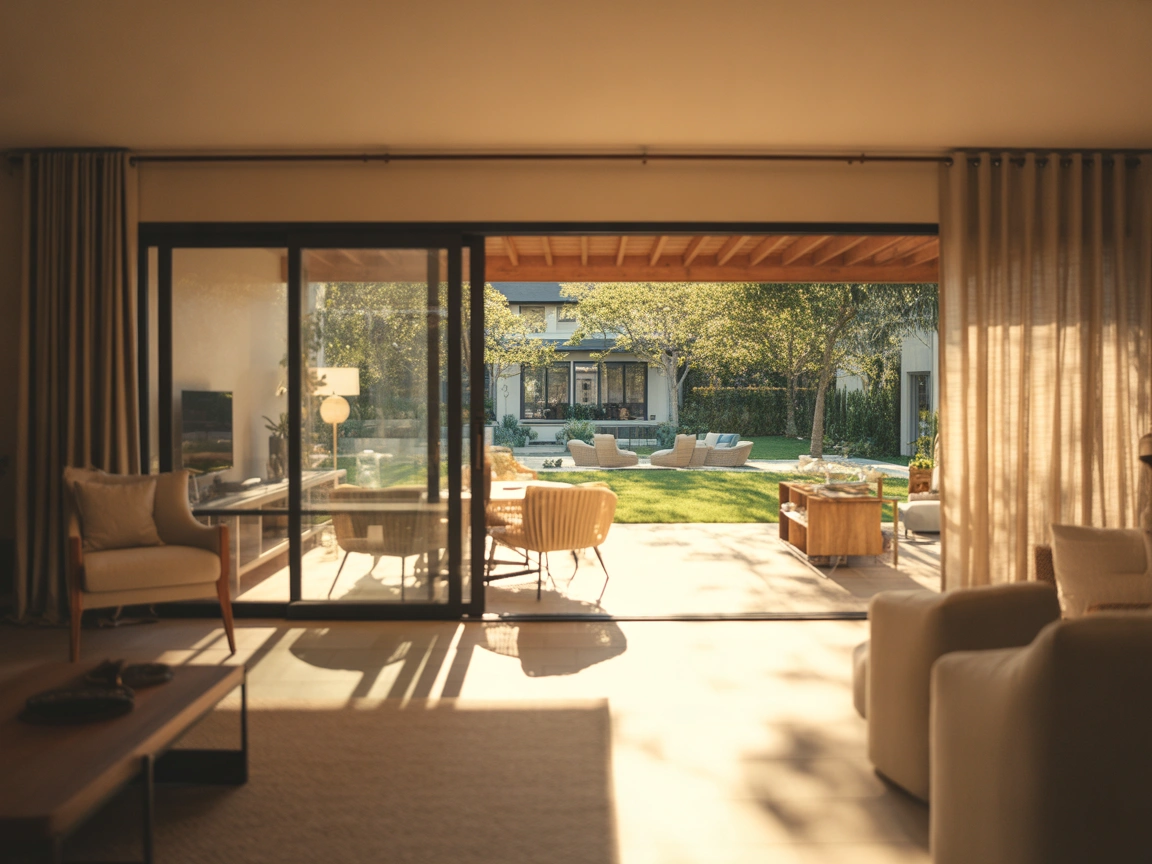
2. Multi-Panel Sliding Glass Wall

This is for the person who wants to erase the line between inside and outside completely. Multi-panel sliding systems — sometimes called “pocket glass walls” — feature three to six glass panels that stack or pocket into the wall when fully open. When closed, it’s a stunning glass wall. When open, it’s basically an outdoor room.
These are incredibly popular in open-plan kitchens and family rooms that lead to covered patios. Imagine hosting a dinner party where guests naturally drift between the kitchen island and the patio — no awkward sliding door moment, just seamless flow. It’s an investment, but it’s the kind of thing that changes how you live in your home every single day.
3. Frameless Sliding Glass Door
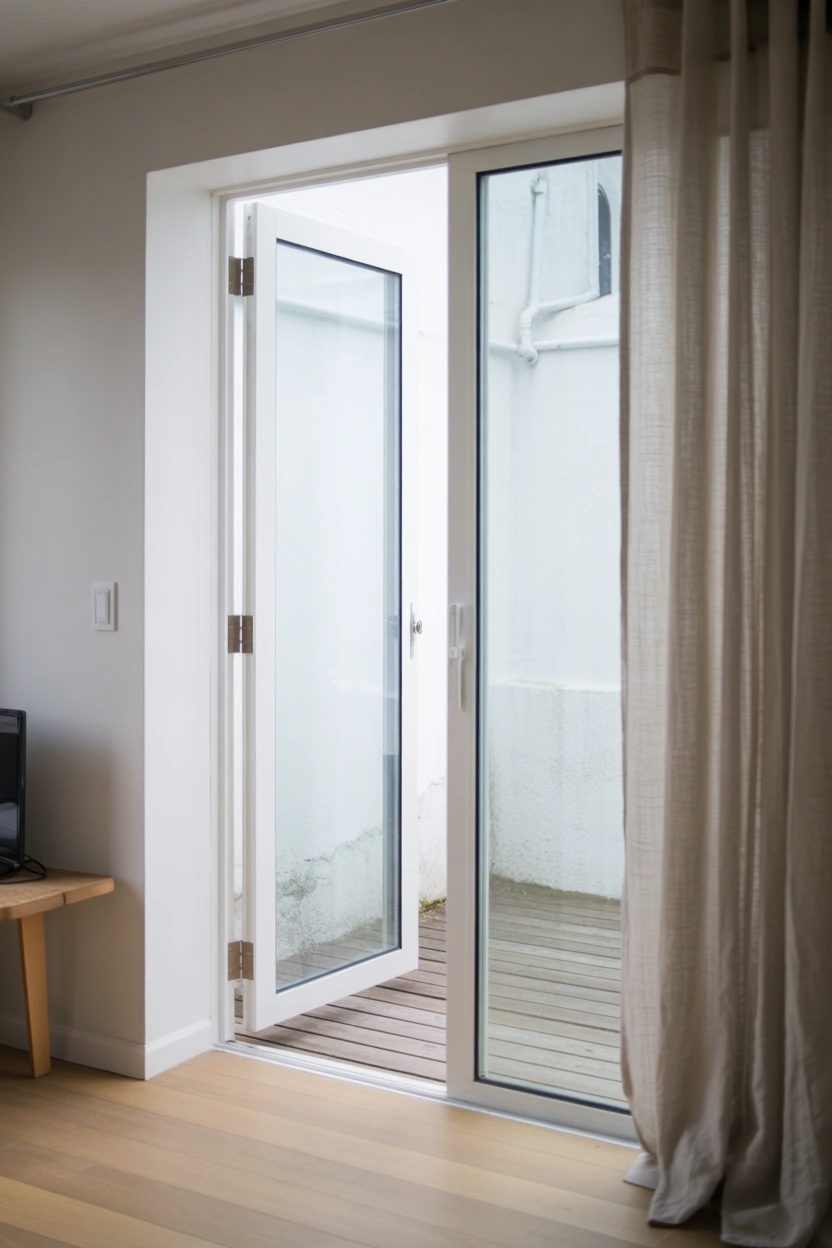
Minimalism at its purest. Frameless sliding glass doors eliminate the visible frame almost entirely — what you’re left with is basically a sheet of glass that appears to float in the opening. It’s a very architectural, very intentional look that suits modern and Scandinavian-style interiors perfectly.
The hardware is usually concealed or very minimal — a small chrome or brushed nickel pull, a recessed track at top and bottom. The result is a door that almost disappears when it’s closed, which makes the outdoor view feel like a painting on your wall. If your backyard is beautiful, this is how you frame it.
4. Sliding Door with Built-In Blinds Between the Glass

This one is genius in its simplicity. The blinds are sandwiched between the two panes of glass — completely protected from dust, pets, and tangled cords. You get full privacy or full view at the tilt of a small wand or the press of a button on motorized versions.
It’s a practical choice that doesn’t sacrifice style. From the outside, the door looks totally clean and modern. Inside, you get effortless light and privacy control without any fuss. Perfect for patio doors that face a neighbor’s yard or a busy street.
5. Wood-Framed Sliding Patio Door
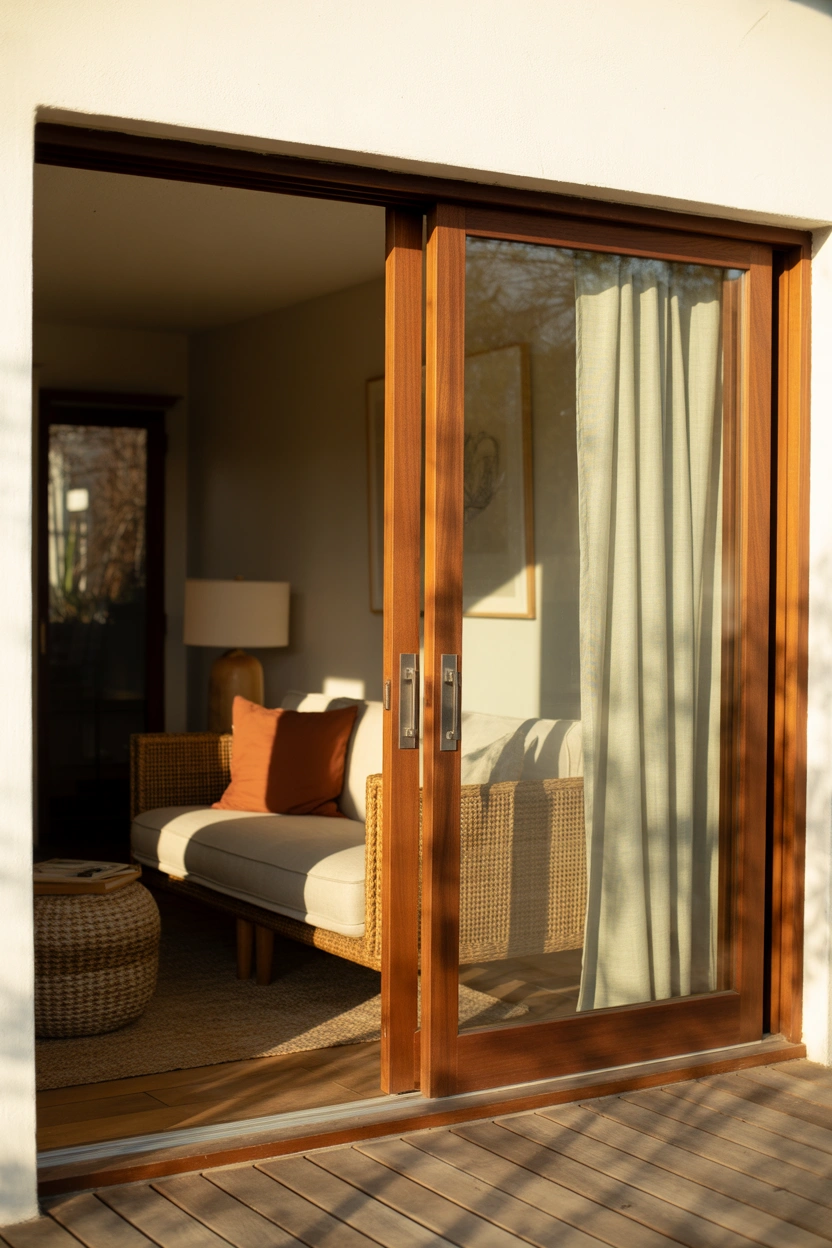
There’s a reason wood never fully goes out of style. A wood-framed sliding patio door brings warmth and texture that no other material can replicate. Run your hand along a well-finished walnut or white oak frame, and you immediately feel the quality that aluminum can’t match.
Stain choices make a huge difference here. Go dark walnut for a moody, sophisticated look. Choose whitewashed or natural oak for a lighter, coastal, or Scandinavian feel. Pair with matching interior wood tones throughout the room, and you’ve got a cohesive, designer-level result that feels like it was planned by someone who really knows what they’re doing — because it was (you).
6. Black Steel Sliding Patio Door
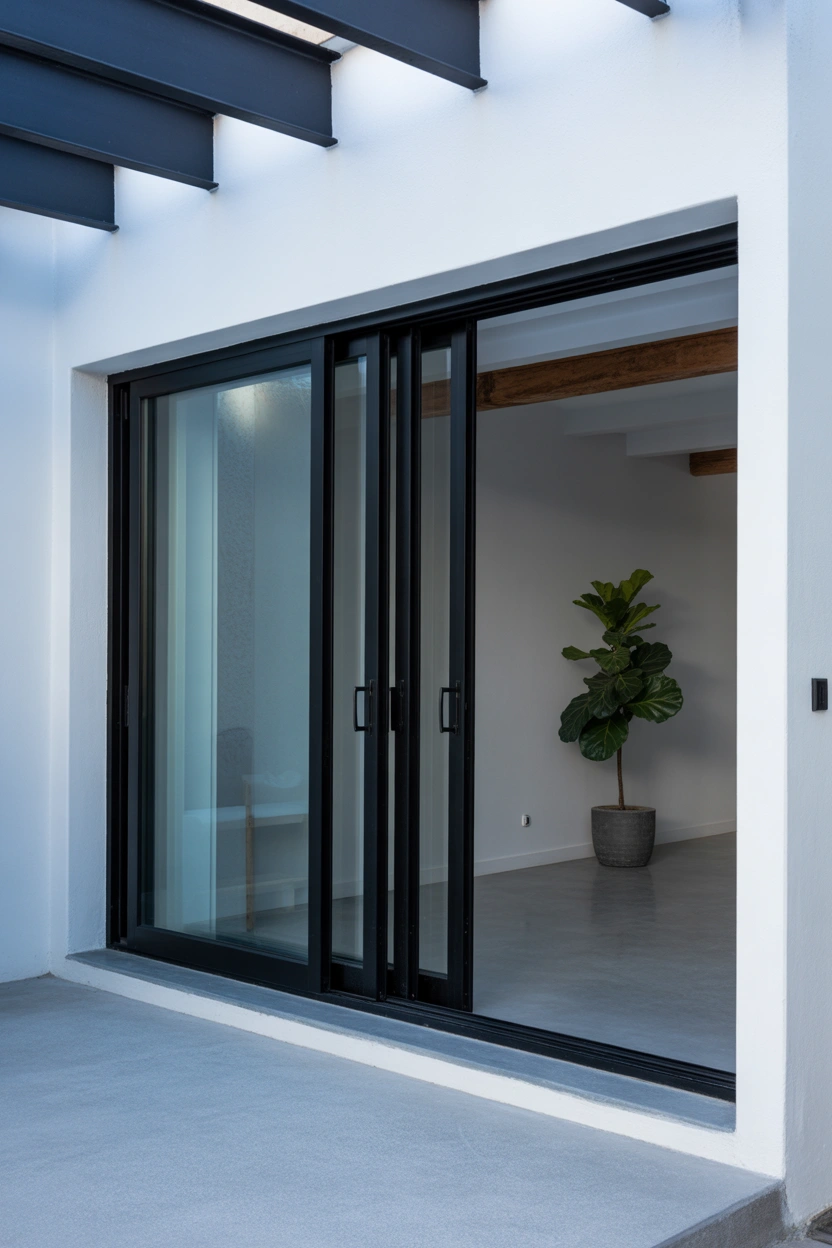
If you’ve spent any time on home design Instagram or Pinterest, you’ve seen this one — and for good reason. Black steel or black aluminum sliding doors are absolutely stunning against white walls, light concrete, or pale oak floors. The contrast is architectural and dramatic without being overwhelming.
They give any home a subtle industrial edge without going full warehouse loft. Works in modern homes, transitional spaces, and even farmhouse-adjacent interiors when balanced with warm wood and soft textiles. The matte black finish on the hardware is the detail that pulls it all together. Even a budget vinyl door in matte black will look significantly more expensive than a standard white one.
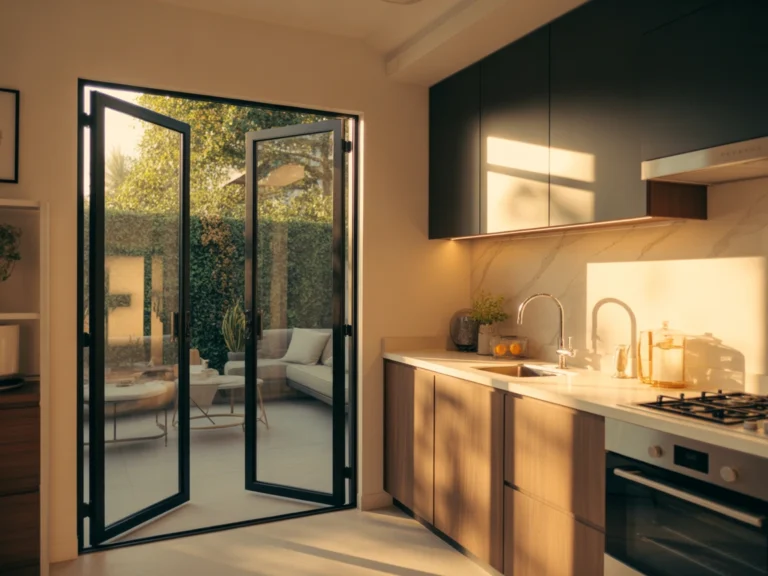
7. Classic White French Doors
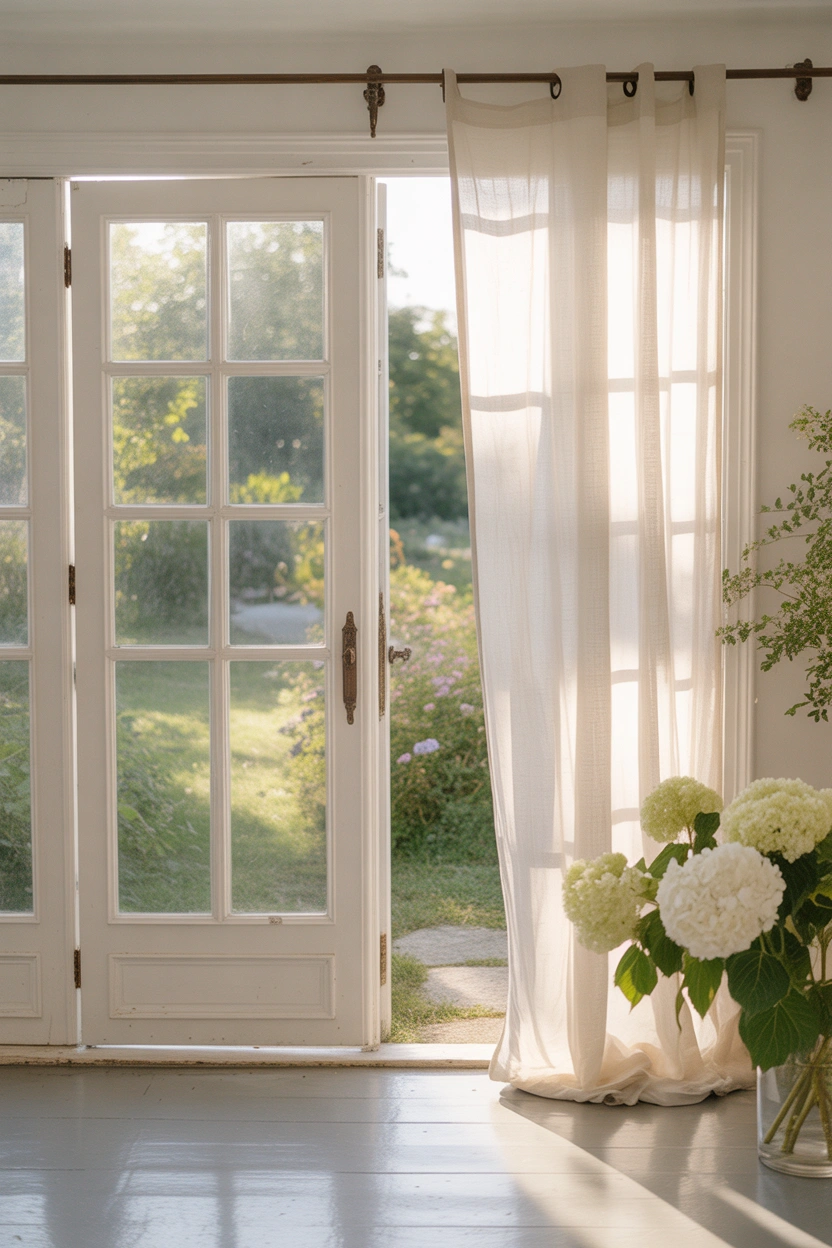
Some things earn their classic status, and white French doors are one of them. They bring an airy, timeless elegance that works in traditional homes, cottages, coastal houses, and even some modern transitional spaces. The divided light panes — typically six or eight per door — create a rhythm that feels both historic and fresh at the same time.
What makes them work is simplicity. White painted frames, simple chrome or brass hardware, crisp trim. They don’t need much help. Style them with sheer linen curtains that flutter when the doors are open, and you’ve got the kind of scene that makes every summer morning feel like a small luxury.
8. Black French Doors with Transom Window
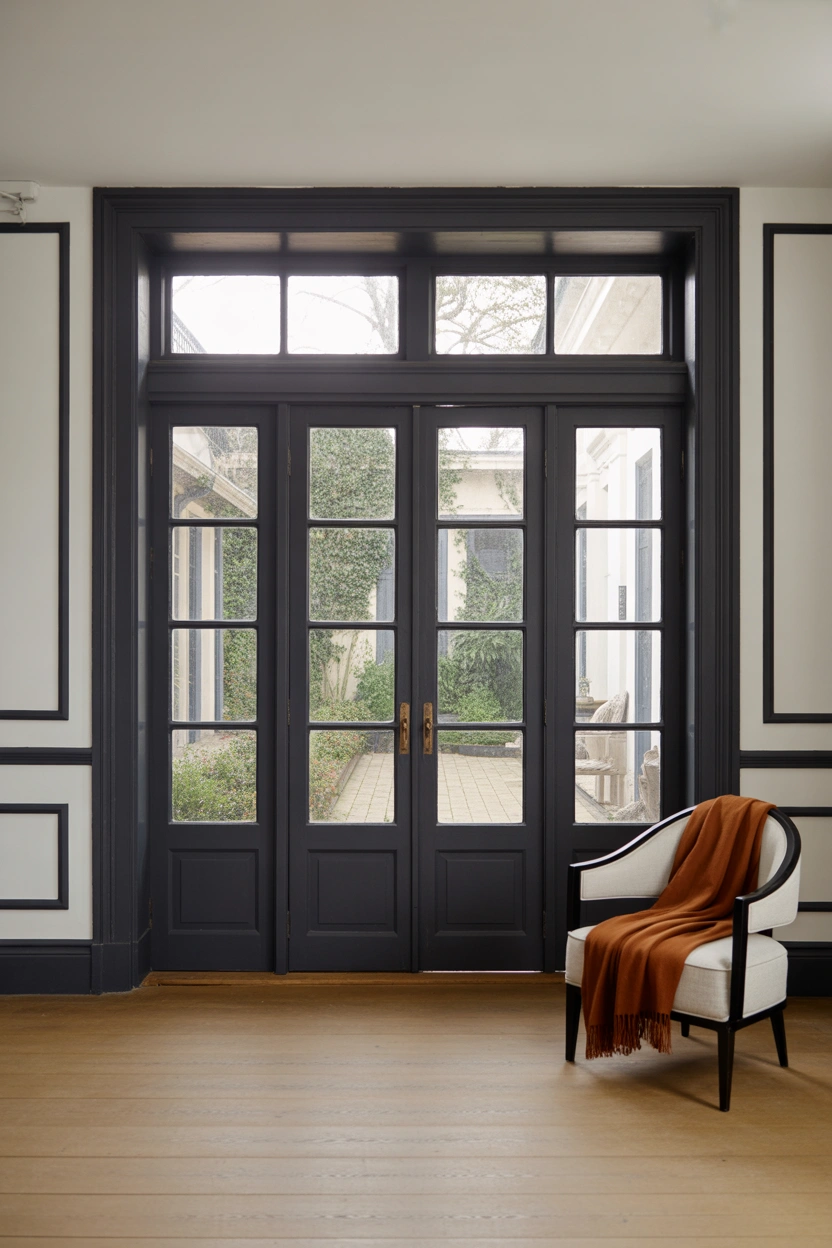
This combination — black French doors topped with a transom window — is hands-down one of the most dramatic patio door looks you can achieve without breaking the bank. The transom adds height to the opening, which draws the eye upward and makes ceilings feel taller. The black frame adds weight and modernity to what is otherwise a traditional door style.
It’s a hybrid that blends classic architecture with current design sensibility. You’ll see this look in new-build homes that want character, and in renovations of older homes that want a modern edge. Add matte black lever handles and you’ve got a cohesive, polished result that photographs beautifully.
9. Rustic Wood French Doors
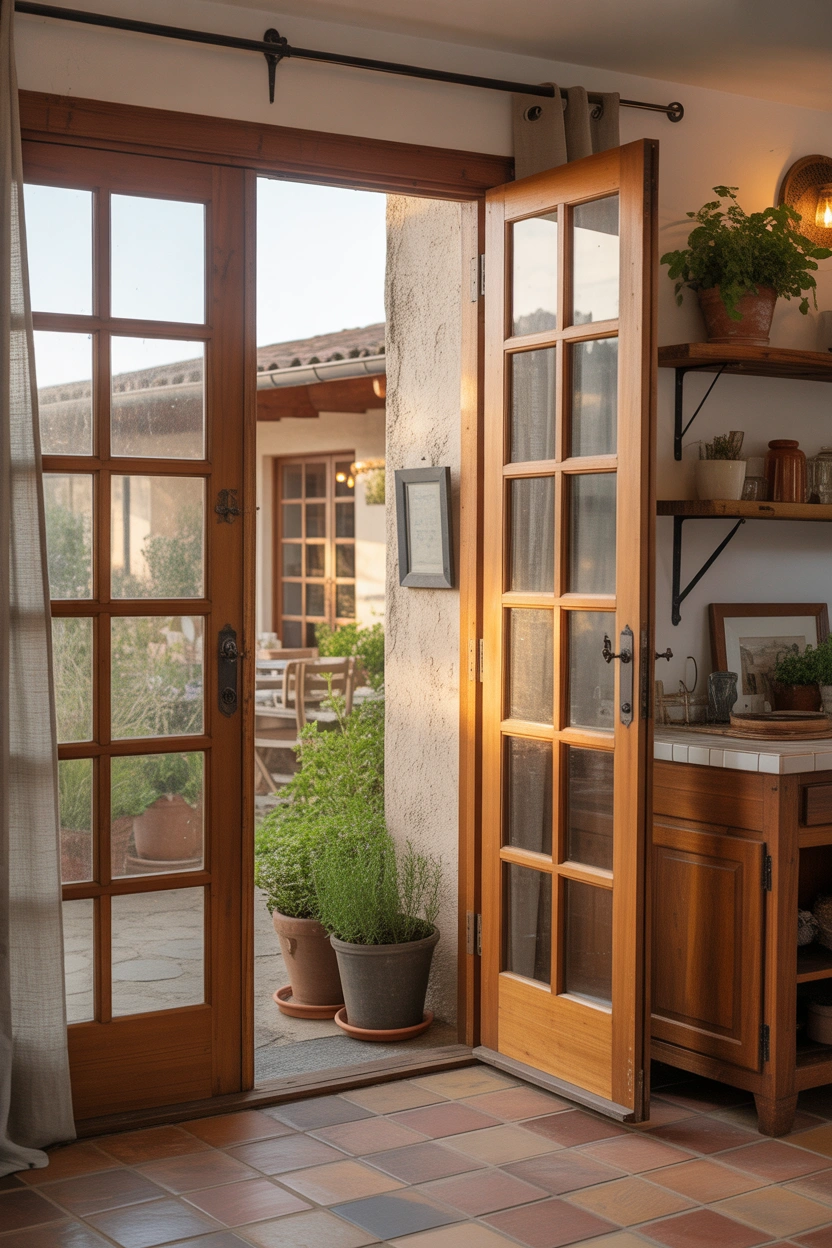
Think weathered oak, knotty pine, or reclaimed wood with a natural finish — these French doors lean into their imperfection and are better for it. They feel more casual and lived-in than polished alternatives, which makes them perfect for farmhouse interiors, mountain cabins, and any home where warmth trumps sleekness.
Don’t overlook the hardware here. Old-fashioned iron handles, strap hinges, or aged bronze pulls will complete the rustic picture. Let these doors be a statement of intentional character — the kind of door that looks like it has a story.
10. Arched French Doors
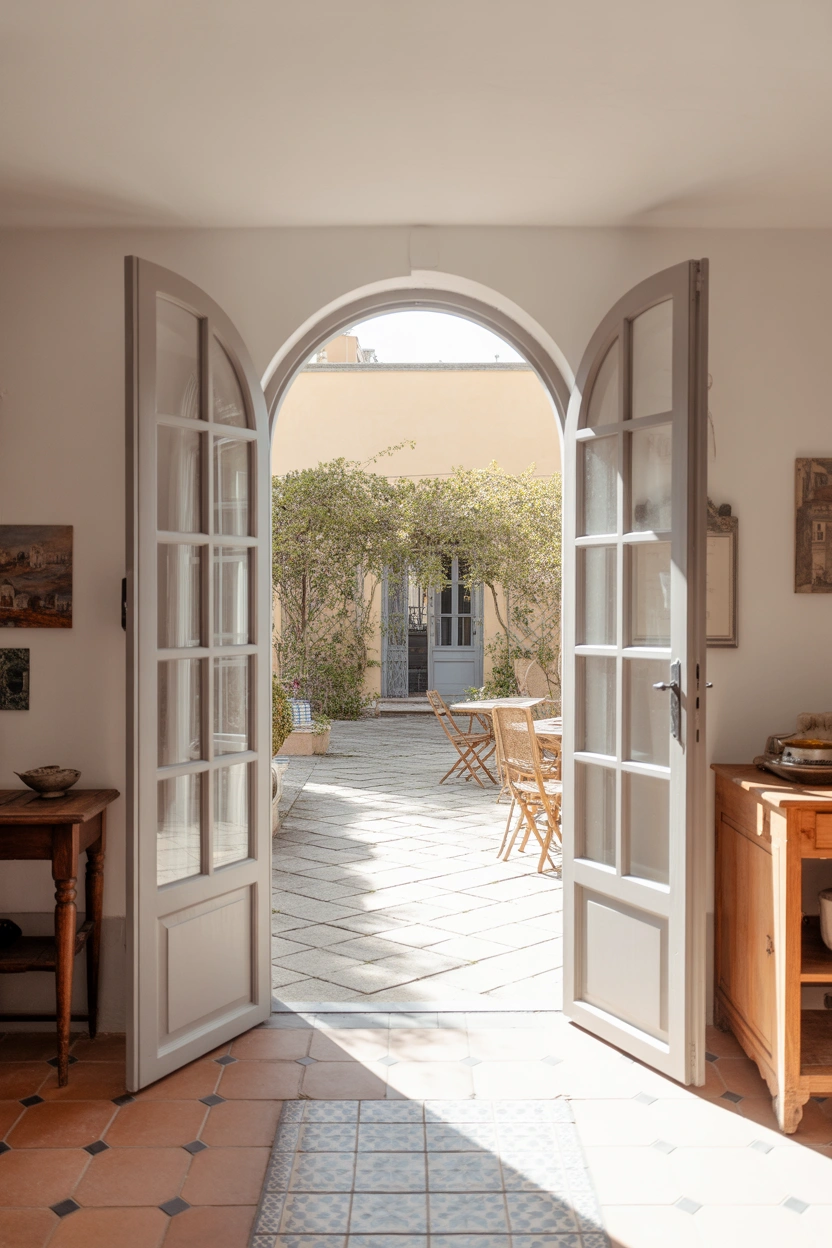
Arched patio doors feel inherently European and are unlike almost anything else you’ll find in a standard home. The curved top transforms the entire doorway into an architectural moment — something that looks deliberate and considered rather than just functional.
These suit Mediterranean-inspired homes, Spanish-style architecture, or any home that wants a dramatic focal point in a back room or sunroom. They’re not the most practical option (custom sizing is usually required), but when you see them done well, you understand immediately why someone would go through the extra effort.
11. French Doors with Sidelights
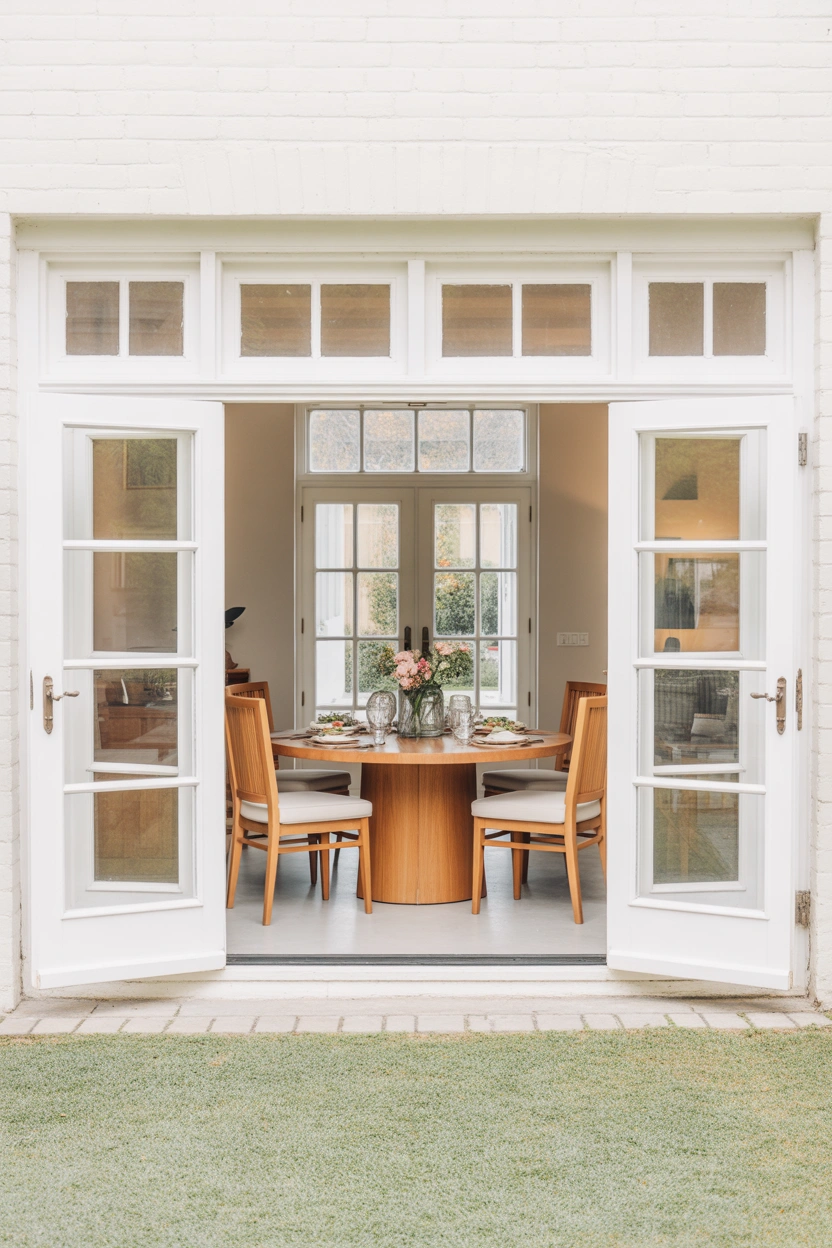
Adding fixed glass sidelights on either side of French doors completely changes the proportion and light quality of the entire wall. Suddenly you have a full glass moment — the doors plus sidelights working together as one architectural element — that floods the room with natural light and creates a beautiful symmetrical composition.
This is a particularly good solution for back walls of dining rooms or formal living rooms. It creates a sense of occasion when you walk through, like you’re crossing a threshold to somewhere special. The added light means the room functions better on gray days too, which makes it genuinely practical, not just pretty.
12. Full-Width Bifold Glass Doors
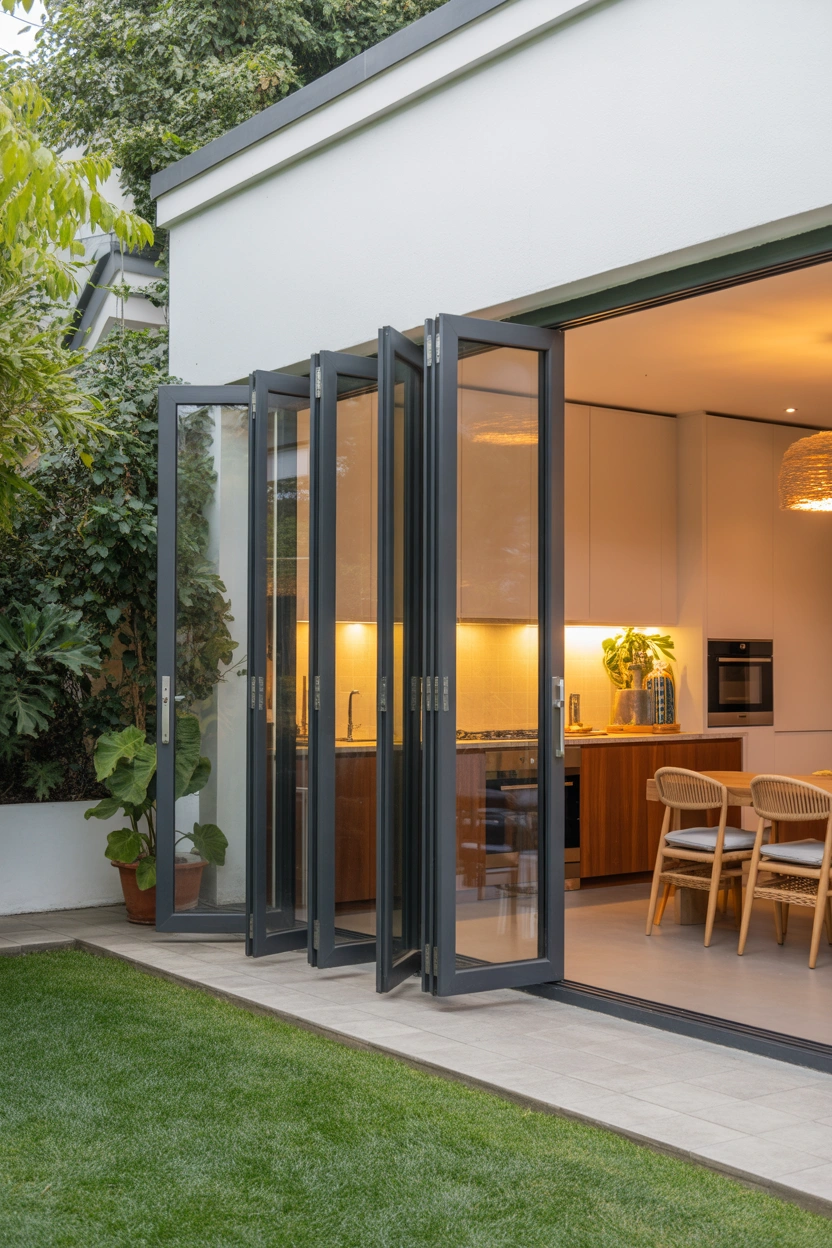
If you want the most dramatic “wow moment” in indoor-outdoor living, bifold glass doors are the answer. You fold them back panel by panel, and the entire wall opens up. No sliding tracks in the middle of your view. No half-open compromise. Just a fully open wall connecting your interior to the outside.
They’re transformative in entertainment spaces, kitchen-dining areas, and any room where you host regularly. When the panels are folded back, the division between inside and outside completely dissolves. You can set up a table that spans both spaces. It’s genuinely a different way of living in a home, and once you experience it, it’s very hard to go back.
13. Aluminum Bifold Patio Doors
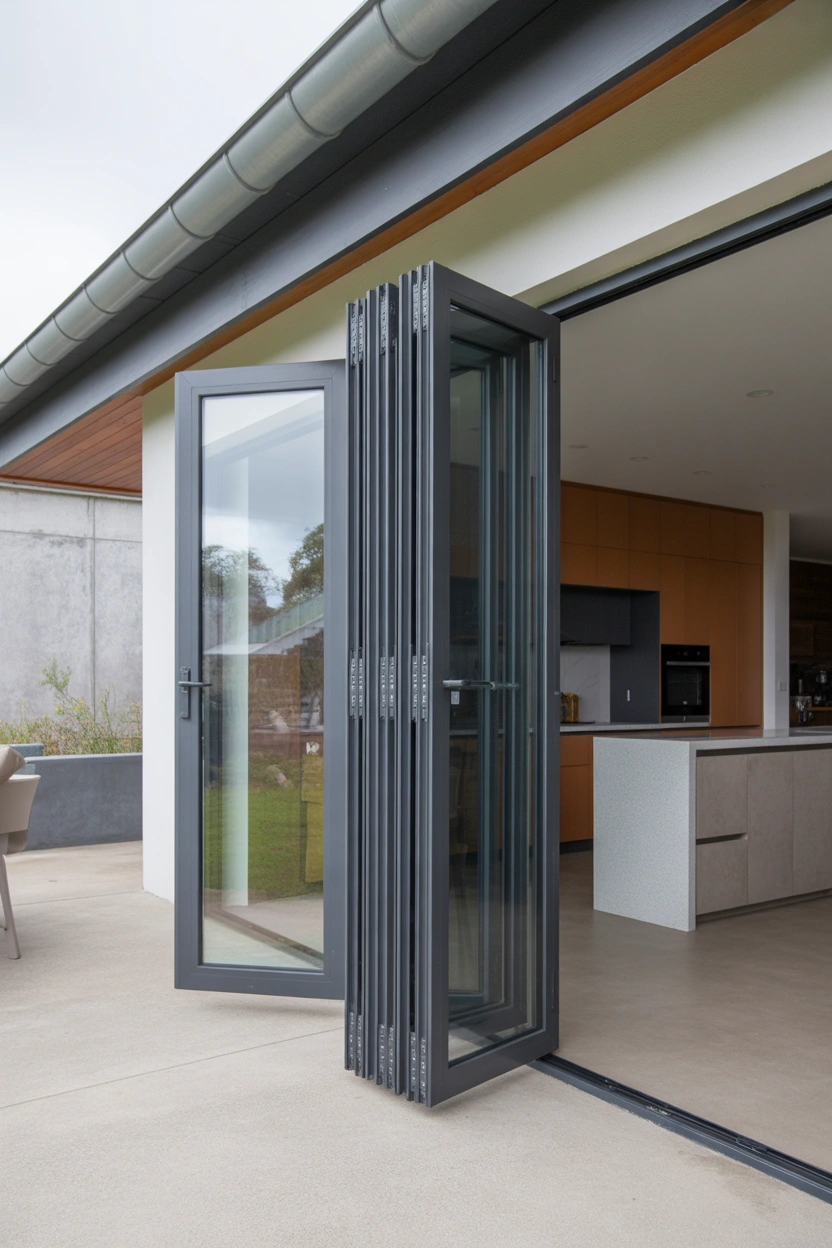
Aluminum frames suit bifold doors exceptionally well because they can be made slim and precise — slim enough that you barely notice the frame, and your view is mostly uninterrupted glass. The structural strength of aluminum means you can span a wide opening with minimal visible support.
Powder-coat finishes on aluminum bifolds have improved dramatically, too. You can get anthracite gray, bronze, champagne, forest green, and of course matte black — all durable finishes that will hold up against years of weather and use. This is the contemporary choice for a reason.
14. Timber Bifold Doors for Warm Interiors
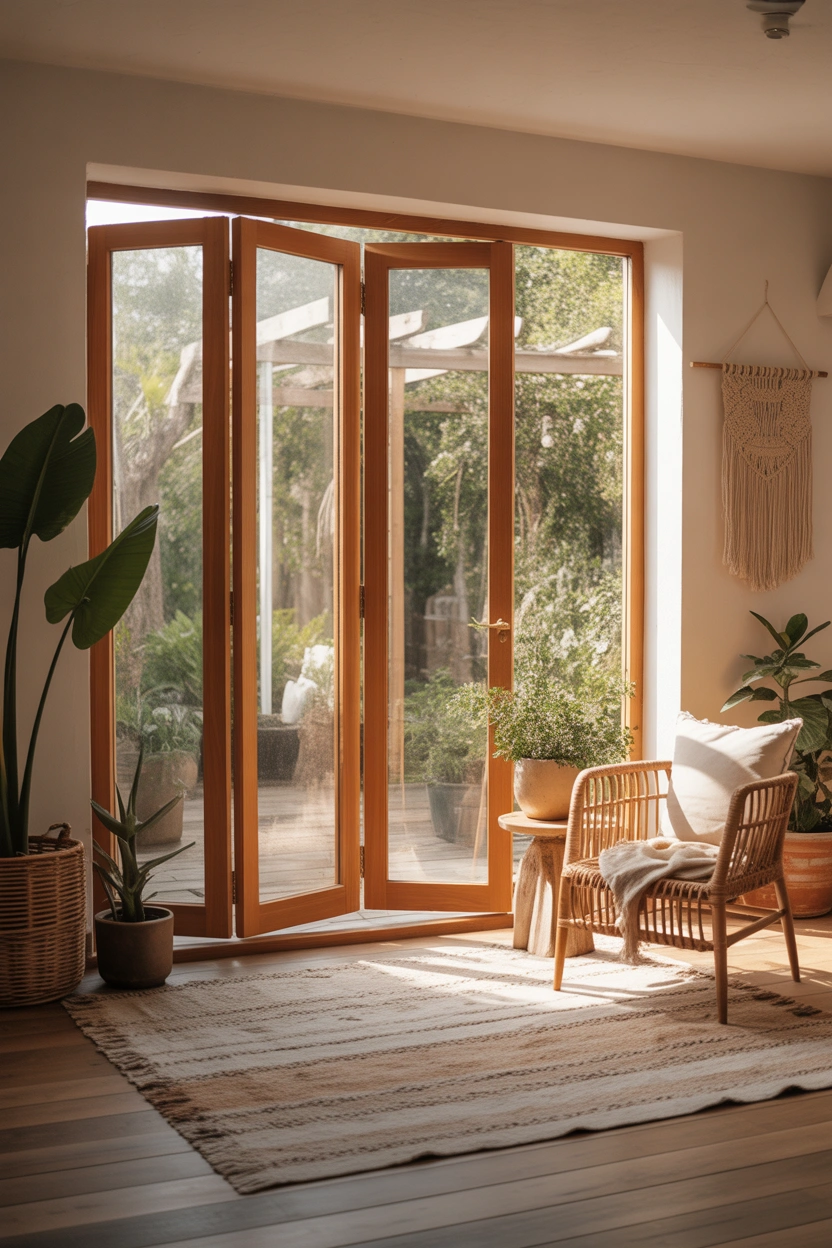
Sometimes the clean perfection of aluminum isn’t what a space needs. Timber bifold doors bring an organic warmth and textural richness that’s particularly beautiful in homes where natural materials are the foundation of the design language — exposed wooden beams, stone flooring, rattan furniture.
Oak, pine, and accoya wood (a modified timber that resists moisture and warping) are all popular choices. Leave them natural with a clear oil finish to show the grain, or paint them in a deep earthy tone — dark forest green, warm off-white, charcoal — for a more dramatic effect.
15. Bifold Doors Opening to a Covered Patio

Here’s the thing about a covered patio — it extends your livable seasons significantly. Add bifold doors to the opening, and now your covered outdoor area genuinely functions as a room extension. Rain? No problem. The doors fold back and you’re still connected to the outside without getting wet.
This setup is ideal for climates with variable weather or for anyone who entertains year-round. The covered patio acts as a transitional space, buffering the interior from the elements while maintaining the open, airy feel you’re after. Add a ceiling fan and heater to the covered section, and it’s usable twelve months a year.
16. Oversized Pivot Door
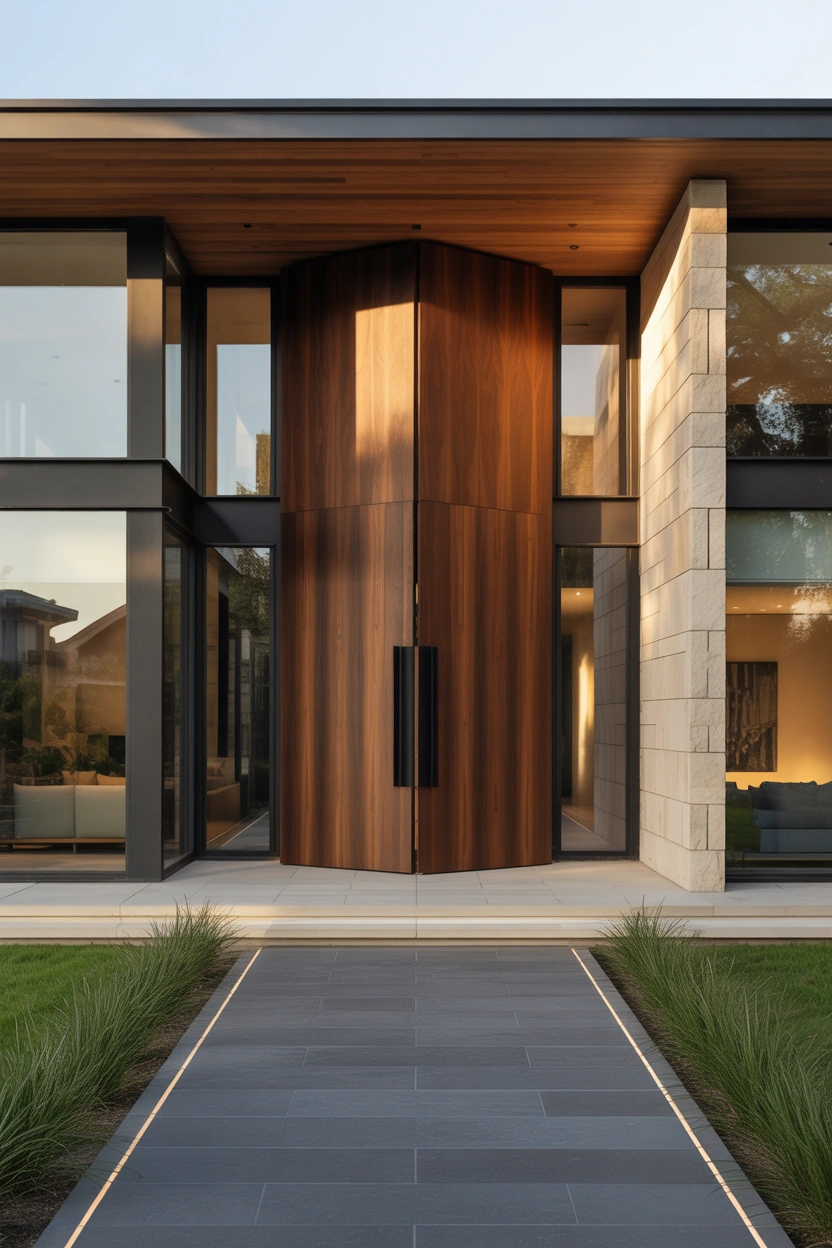
Pivot doors rotate on a central or off-center vertical axis rather than swinging from a hinge. The result is a door that moves differently — it pivots — and the visual effect is dramatically more architectural than a standard swing. Add an oversized scale (think 9 to 12 feet tall) and you’ve got an entrance that genuinely stops people in their tracks.
For a patio door application, an oversized pivot works beautifully as a single large panel connecting a ground-floor reception room to a rear terrace or garden. They tend to appear in high-end renovations and custom builds, but the design principle is accessible: one door, enormous presence, zero visual clutter.
17. Glass Pivot Door with Aluminum Frame
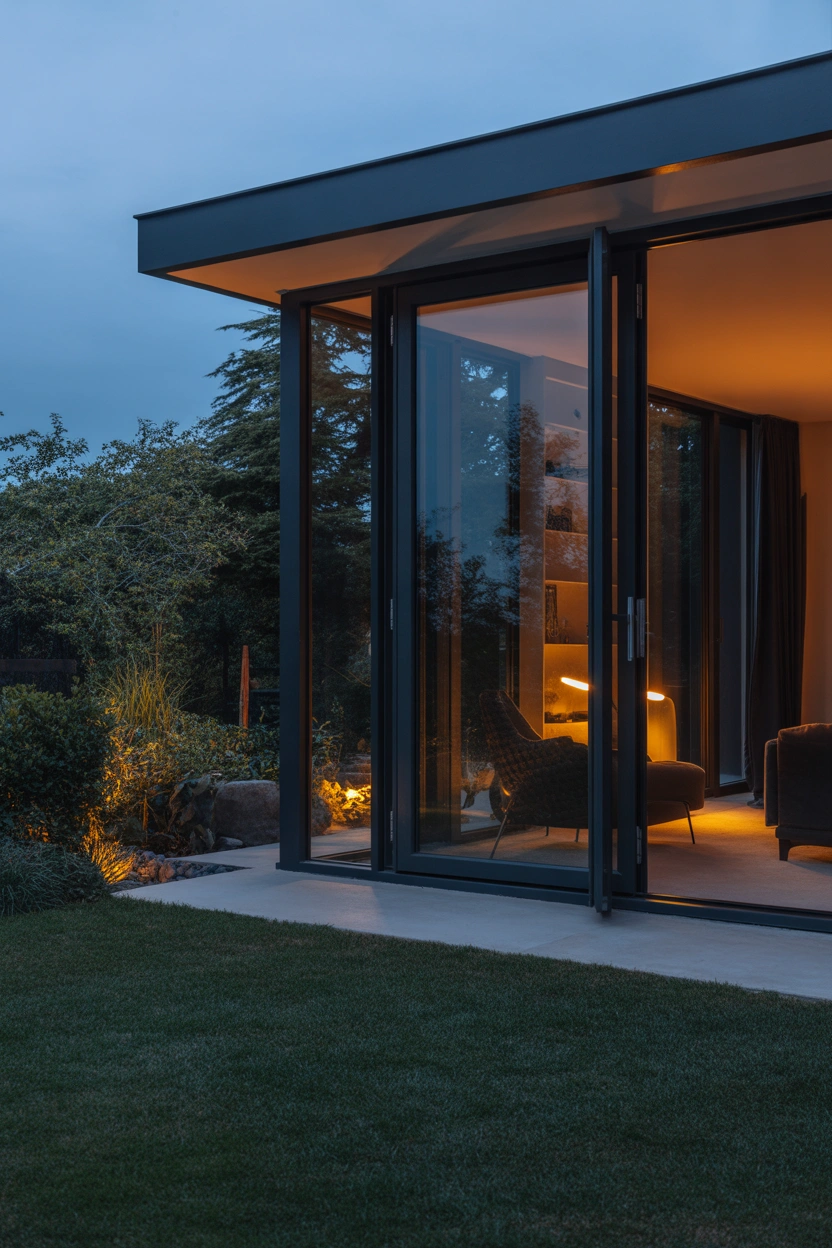
Want all the drama of a pivot door but with a lighter, more transparent feel? A glass panel pivot door — framed in slim aluminum — gives you that architectural rotation moment without closing off the view. You can see through it when it’s closed, which preserves the indoor-outdoor connection even on colder days.
These are especially striking at night. With good exterior lighting, a glass pivot door becomes a backlit feature — you see the garden illuminated, the door floating in the opening, the interior glowing. It’s a design choice that works around the clock.
18. Patio Door Refresh on a Budget
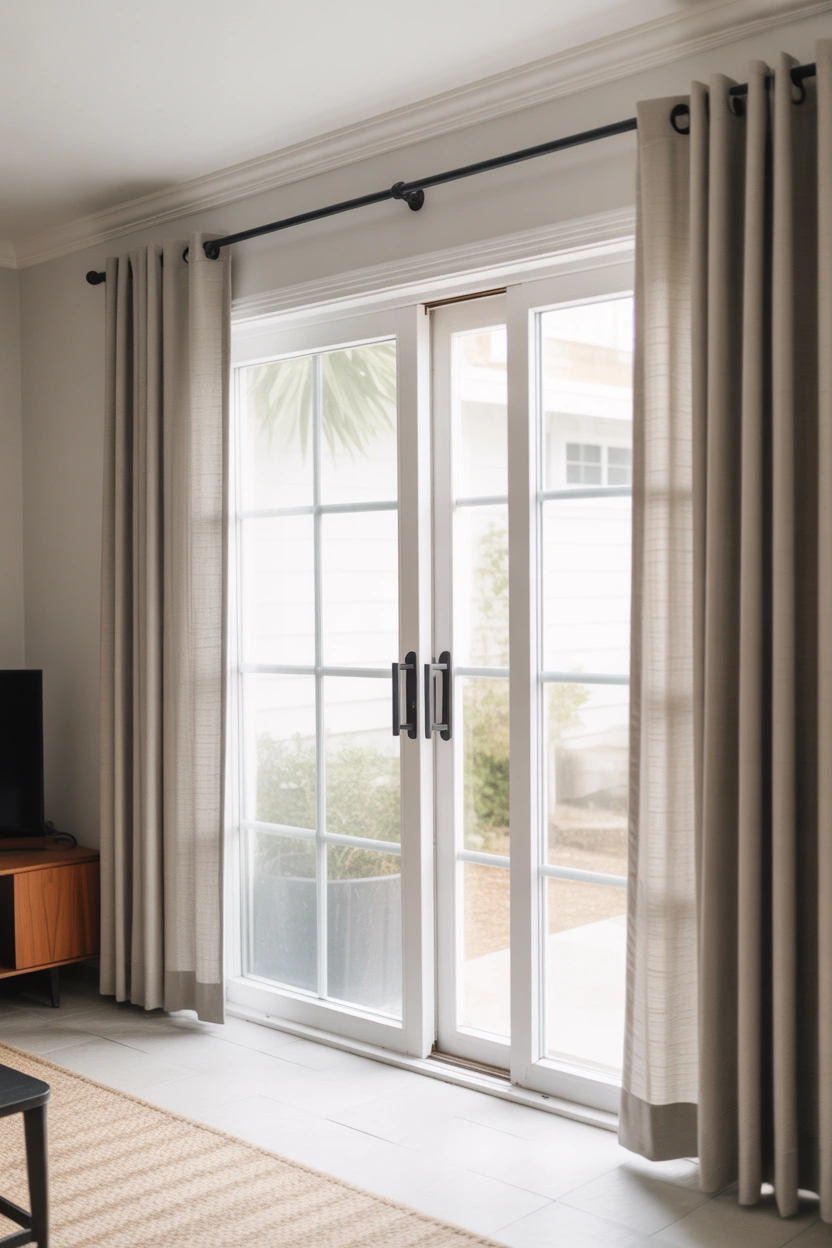
Not everyone is in full renovation mode — and that’s completely fine. You can dramatically improve an existing patio door without replacing it. Start with the hardware: swap standard brass or chrome handles for matte black lever pulls. It’s a $30–$80 change that looks like a $500 upgrade.
Next, look at the frame. If it’s white vinyl and still in good condition, a coat of specialist plastic paint in a modern color (slate gray, soft black, sage green) will transform it. Finally, look at what’s around the door — a simple Roman shade or floor-length linen drapes hung from a black curtain rod will immediately make the whole area feel considered and stylish.
19. Narrow Sliding Door for Small Patios
Small outdoor spaces have their own rules, and patio door scale is one of them. An oversized door opening into a tiny urban balcony or narrow side patio looks awkward and can actually make both spaces feel smaller. A slim single-panel sliding door — well proportioned to the opening — is the smarter choice here.
The key is getting the proportions right and keeping everything clean and uncluttered. A clear glass panel, minimal frame, and no heavy window treatments. The goal is to bring in light and maintain a visual connection to the outside without the door dominating a small room.
20. Curtains and Styling Around Your Patio Door
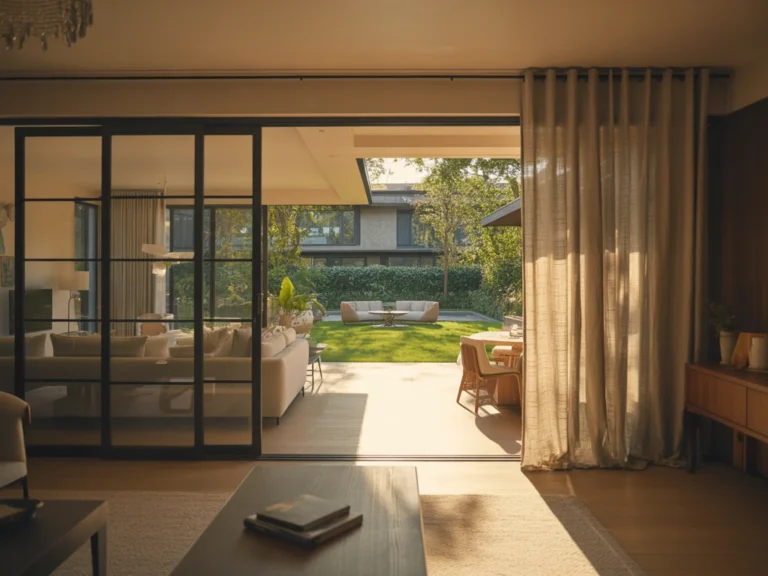
The door is only part of the equation. What you hang (or don’t hang) around it, and how you arrange the furniture nearby, matters just as much for the overall effect. Full-length curtains hung high and wide — from the ceiling, well outside the door frame — make the opening look taller and grander than it actually is.
Go for linen, cotton, or velvet, depending on your interior style. Light neutral tones for a soft, airy feel; deep jewel tones for a richer, more dramatic look. For a truly Pinterest-worthy setup, add a large indoor plant on one side of the door — a monstera, a fiddle leaf fig, or a tall olive tree — to create asymmetry and a sense of layered indoor-outdoor connection.
21. Fluted Glass Panel Patio Door
One of the most talked-about glass trends in home design right now — fluted (reeded) glass panels bring texture and a semi-translucent quality that’s different from anything flat glass offers. The vertical ribbing diffuses light beautifully, creating a soft, almost glowing effect on the interior wall when the sun hits it.
It’s privacy without darkness, pattern without busyness. Fluted glass works particularly well in older homes where you want a modern update but something with character — not just another flat glass door. It feels artisanal, considered, and genuinely on-trend without being faddy.
Patio Door Frequently Asked Questions
What type of patio door is most popular in 2025?
Sliding glass doors remain the most popular choice overall, thanks to their space efficiency and clean look. Bifold and multi-panel glass walls are the fastest-growing category among renovators who want a more dramatic indoor-outdoor connection.
How can I make my patio door look more expensive?
Four changes make the biggest difference: upgrade the door handle to matte black or brushed brass, paint or replace the frame in a current color (not builder white), hang floor-length curtains from ceiling height rather than door height, and style the garden view visible through the door.
What is the most energy-efficient patio door style?
Sliding patio doors with double or triple-pane low-E glass, a good thermal break in the frame, and proper weatherstripping at the threshold consistently perform best for energy retention. Fiberglass frames outperform vinyl and aluminum in thermal performance.
Conclusion
Your patio door is one of the most-seen, most-used design elements in your entire home. It affects the light, the perceived size of the room, the connection to the outdoors, and, honestly, your daily mood. Getting it right — or even getting it better — is one of the highest-ROI upgrades you can make.
Start with what genuinely bothers you about your current setup. Work from there, whether that means a full replacement, a new finish, or just a hardware swap and some better curtains. Small steps taken with intention always beat big, undefined overhauls.
Save this post, bookmark the ideas that resonated, and start planning. Your future patio door is out there.