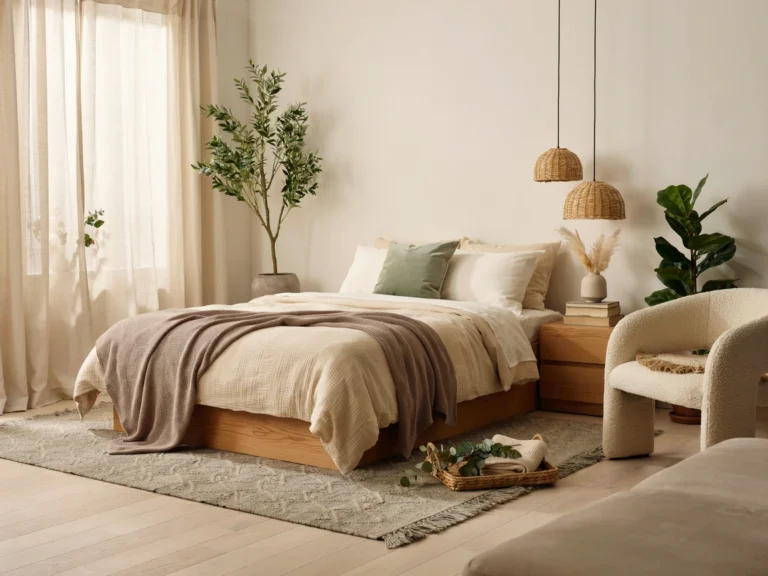
20 Bedroom Storage Ideas That Actually Work in Small Spaces
You clean your bedroom, and somehow it’s cluttered again by Thursday. A sweater ends up on the chair, your charger cord tangles on the nightstand, and that basket you bought “for storage” is somehow the messiest thing in the room.
Here’s the thing — that’s not a tidiness problem. It’s a storage problem. Most bedrooms don’t need more furniture. They need the furniture they already have actually to work harder.
These bedroom storage ideas are built around real rooms — small ones, rentals, shared spaces, rooms without a single closet. Some you can set up this weekend. Others are worth planning around when you’re ready to invest. Either way, you’ll walk away with a room that stays calm without you having to fight for it every day.

How to Figure Out What Storage Your Bedroom Actually Needs
Before you buy anything, take five minutes and look at what’s actually piling up. In most bedrooms, it’s the same three culprits: clothes with nowhere specific to go, everyday items like chargers and books that never made it back to a “home,” and bulky seasonal stuff — extra blankets, off-season clothes — hogging closet space they don’t need year-round.
Here’s a rule that makes the rest of this list easier to use: things that look messy when visible (laundry, shoes, chargers) belong in closed storage. Things that look good on display (books, a few folded sweaters, plants) can go on open shelves. Mixing that up is the #1 reason storage furniture ends up cluttered instead of helping.
One more thing before you start: if you’re adding anything tall or wall-mounted — a shelf, an overhead cabinet, a floating unit — check the weight limit and anchor it properly, especially in a kids’ or shared room. It’s an easy step to skip and not worth the risk.
1. Floating Shelves Above the Bed

A single shelf spanning the width of your headboard turns dead wall space into real storage without touching your floor plan. It works especially well in small bedrooms where every square foot on the ground matters more than the wall does. For more ways to style that wall, our bedroom shelf decor ideas break down what to put on display versus what to hide.
Mount it about 8–10 inches above your headboard so you’re not knocking things loose when you sit up. Keep the bottom third of the shelf light — books, a small plant, a framed photo — and save any bulkier bins for a lower, closed piece elsewhere in the room.
- Best for: small or narrow bedrooms with unused wall space
- Budget tip: a single 48-inch floating shelf costs less than most nightstands
- Watch out for: overloading it with heavy decor — check the weight rating before hanging anything fragile above where you sleep
2. Slim Vertical Wardrobe

If your closet is too small — or nonexistent — a tall, narrow wardrobe (usually 20–24 inches deep) gives you full hanging space without eating up the room the way a wide dresser does.
Tuck it into a corner or along the shortest wall so it reads as part of the room’s structure instead of an obvious add-on. Choose one with a mix of hanging rod and shelving inside so you’re not stuck with only one storage type.
- Try this if: you have no closet or a closet too small for your wardrobe
- Renter-friendly note: freestanding wardrobes need zero installation and move with you
- Pairs well with: under-bed bins for the items that don’t need to hang
3. Over-the-Door Organizer

This is the storage most people forget exists. A canvas or wire organizer on the back of your bedroom or closet door holds shoes, accessories, small bags, or grooming items — all in space that would otherwise sit empty.
Hang it on the inside of the door so it stays out of sight when the door’s open, and group items by category (one row for shoes, one for accessories) so it doesn’t turn into a junk drawer on the wall.
- Best for: small bedrooms and shared rooms where every drawer is already full
- Small-space fix: genuinely free storage — no floor or wall space used at all
- Budget tip: under $20 at most home stores
4. Pegboard Wall System

A pegboard isn’t just for garages. Mounted on one bedroom wall, it holds bags, hats, jewelry, and small baskets on movable hooks — and it looks intentional if you keep the layout simple instead of packing every hole.
Paint it to match your wall color if you want it to blend in, or leave it a contrast color if you want the storage to double as decor. Rearrange the hooks as your needs change — that flexibility is the real advantage over fixed shelving.
- Best for: teens’ rooms, dorm-style bedrooms, or anyone who reorganizes often
- Styling trick: stick to 2–3 hook styles so the wall doesn’t look busy
- Pairs well with: a small floating shelf below for anything that can’t hang
5. Freestanding Garment Rack

If you genuinely have no closet, a garment rack styled well can become a feature instead of a workaround. Group clothes by color for a curated look, and keep it to your most-worn pieces rather than your entire wardrobe. This is a go-to move in tight quarters — see how it works in our dorm room layout ideas for more small-space storage tricks.
Place it against a plain wall so it reads as a styled moment, not overflow. A small shelf or bin underneath catches shoes or folded items, so the whole setup functions as a mini closet instead of a rack that slowly becomes a clothes pile.
- Best for: no-closet bedrooms, studio apartments, rentals
- Small-space fix: takes up less visual weight than a wardrobe when styled sparsely
- Watch out for: overloading it — a packed rack looks cluttered fast
6. Wall-Mounted Clothing Rail

A single brass or black metal rail mounted on the wall holds a rotating selection of outfits — think of it as a “what I’m wearing this week” display rather than your full closet.
This works best paired with a wardrobe or dresser for the rest of your clothes; it’s not meant to replace full storage, just to add an accessible, visible spot for daily rotation.
- Try this if: you want closet-adjacent storage without the bulk of a full rack
- Renter-friendly note: most rails install with just a few screws or removable adhesive strips rated for wall hanging
- Pairs well with: under-bed bins for out-of-rotation clothes
7. Modular Cube Shelving

Stackable cube storage is one of the few pieces that scales with your space — start with four cubes, add more later, or rearrange the configuration when you move.
Mix open cubes for folded items you want visible with a few fabric bins for things you’d rather hide, like mismatched socks or chargers. Keep the whole unit under eye level in a small room so it doesn’t visually take over.
- Best for: no-closet bedrooms, first apartments, kids’ rooms that’ll need reconfiguring later
- Budget tip: one of the most affordable storage systems per square foot of capacity
- Best for: doubles as a closet substitute and a low bookshelf
8. Under-Bed Rolling Bins

The space under most beds is 100% wasted in the average bedroom. Low-profile bins on wheels make that space usable for off-season clothes, extra bedding, or shoes — without you having to crouch and dig through a box.
Measure your bed’s clearance before buying; standard bed frames usually clear 7–9 inches, which fits most flat storage bins. Group by category (one bin for bedding, one for shoes) so pulling one out doesn’t mean unpacking everything else.
- Best for: almost every bedroom — this is the most underused storage space in the house
- Small-space fix: frees up closet space for things you actually use daily
- Watch out for: dust buildup if bins aren’t sealed — a fabric cover or lidded bin solves this
9. Bed With Built-In Drawers

If you’re shopping for a new bed frame anyway, one with built-in base drawers effectively replaces a dresser. It’s a smart move for smaller bedrooms where every extra piece of furniture eats into your walking space.
Use the drawers for bulkier items — bedding, off-season clothes — since they’re deeper than a typical dresser drawer but a bit less convenient to access than eye-level storage. Keep your daily-use clothes in a separate, easier-to-reach spot.
- Best for: bedrooms too small to fit a bed and a full dresser
- Budget tip: often cheaper long-term than buying a bed frame plus a separate dresser
- Pairs well with: a slim vertical wardrobe for hanging clothes
10. Bed Risers With Fabric Bins

Already have a bed you love? Risers lift the frame a few extra inches, opening up enough clearance to slide in flat storage bins — a much cheaper fix than buying a new storage bed.
Choose risers rated for your bed’s total weight (including your mattress and anyone who sleeps in it), and stick to lightweight, seasonal items in the resulting space rather than anything you need often.
- Try this if: you like your current bed frame and don’t want to replace it
- Budget tip: risers plus bins typically cost far less than a storage bed
- Watch out for: risers with a low weight rating — check specs before buying
11. Tension-Rod Closet Shelf

Renters, this one’s for you. A tension rod wedged into a closet creates an instant second hanging level or a shelf for folded items — no drilling, no damage deposit at risk. If you’re dealing with a tight closet, our narrow linen closet organization ideas cover more tricks for making the most of limited depth.
Use it to double your hanging space by adding a lower rod for shorter items like shirts and skirts, freeing the original rod for longer pieces like dresses and coats. It takes about five minutes to set up and comes down just as fast.
- Renter-friendly note: zero permanent installation, fully reversible
- Best for: small or single-rod closets that feel maxed out
- Budget tip: one of the cheapest storage upgrades you can make
12. Adhesive Hook Rail

A row of adhesive hooks near your closet or bed handles the stuff that never has a proper spot — bags, robes, tomorrow’s outfit, a scarf you’ll forget exists in a drawer.
Rated adhesive hooks (check the weight limit on the packaging) hold surprisingly well and remove cleanly, which matters if you’re in a rental. Keep the rail to 3–4 hooks max so it stays functional instead of turning into a coat pile.
- Renter-friendly note: removes without damaging paint when you follow the removal instructions
- Try this if: you keep re-hanging the same robe or bag on your door handle
- Watch out for: overloading past the rated weight limit — check before hanging heavier items
13. Freestanding Shelving Unit
A simple open shelving unit — no installation required — is one of the most flexible storage pieces you can own, since it works as a bookshelf, a closet substitute, or bathroom-adjacent storage depending on where you put it.
In a bedroom, use the lower shelves for closed bins and the upper shelves for folded items or books you actually want visible. Because it’s freestanding, it goes with you if you move, unlike anything built in.
— no walls involved at all
- Best for: rooms with awkward corners or unused wall gaps
- Pairs well with: fabric bins to hide anything you don’t want on display
14. Storage Ottoman or Bench

A storage ottoman or bench at the foot of the bed does double duty — a place to sit while you get dressed, and hidden storage for extra bedding, throw blankets, or off-season clothes underneath the lid.
Choose one sized to your room; in a small bedroom, a narrow bench reads lighter than a bulky ottoman. Upholstered options also soften a room full of hard furniture surfaces, which helps a small space feel less boxy.
- Best for: bedrooms that need both seating and storage but don’t have room for both separately
- Styling trick: a woven or linen texture keeps it from feeling heavy in a small room
- Pairs well with: folded throws styled on top so it doesn’t look purely functional
15. Nightstand With Drawers

Bedside clutter — chargers, lip balm, a half-read book — needs somewhere to actually live, and an open-top nightstand just isn’t going to cut it. A nightstand with at least one drawer solves this instantly.
Use the drawer for the small stuff you use every night, and keep the top surface to two or three items max. That contrast — a clear surface with an organized drawer underneath — is what makes a nightstand feel styled instead of cluttered.
- Best for: literally every bedroom — this is the single highest-clutter zone in most rooms
- Small-space fix: a slim nightstand with one drawer works even in tight bedside gaps
- Watch out for: using the drawer as a catch-all — it fills up just as fast as the surface if you’re not intentional
16. Storage Headboard With Built-In Cubbies

A headboard with shelving or cubbies built into the frame turns your sleeping wall into functional storage — books, a reading lamp, small baskets — without adding a single extra piece of furniture to the room.
This works especially well in small bedrooms where a nightstand and a bookshelf would otherwise compete for the same wall. Keep the cubbies loosely styled rather than packed, so the headboard still reads as furniture, not shelving.
- Best for: small bedrooms that can’t fit a nightstand and shelving separately
- Styling trick: treat it like open shelving — a few books, one plant, nothing more
- Pairs well with: a slim reading lamp built into or resting on one cubby
17. Closet Rod Doubler

If your closet has one rod and way more hanging clothes than it can handle, a rod doubler adds a second level for shirts, folded pants, or skirts — instantly close to doubling your hanging capacity in the same footprint.
It’s a simple hook-and-rod setup that clips onto your existing rod, so there’s no drilling involved even in a closet you don’t want to modify permanently.
- Renter-friendly note: clips onto existing hardware, fully removable
- Best for: single-rod closets in older homes or smaller apartments
- Budget tip: a fraction of the cost of a full closet system
18. Shelf Dividers and Bins for Folded Items

Stacks of folded sweaters or jeans on a closet shelf tend to collapse into one messy pile the moment you pull something from the bottom. Shelf dividers keep each stack upright and separate, so grabbing one item doesn’t wreck the rest.
Pair them with small bins for anything that doesn’t fold well — belts, scarves, smaller accessories — so your closet shelves stay organized past the first week, not just on move-in day.
- Best for: any closet with open shelving above the hanging rod
- Budget tip: dividers cost very little and prevent the most common closet-shelf mess
- Try this if: your folded stacks are already leaning or collapsing
19. Repurposed Crates or Thrifted Dresser Refresh

Storage doesn’t have to be bought new. Wooden crates stacked as a bedside table-slash-shelf, or a thrifted dresser given new hardware and a coat of paint, can look just as intentional as anything from a catalog — for a fraction of the cost.
If you’re refreshing a dresser, new knobs alone can change its whole feel. Sand and paint only if the piece needs it structurally; sometimes new hardware and a good clean are enough.
- Budget tip: the lowest-cost option on this entire list, especially if you already own the piece
- Styling trick: matching hardware finishes (all brass, all black) makes mismatched furniture look cohesive
- Best for: anyone furnishing a room on a tight budget or wanting a one-of-a-kind piece
20. Zoned Twin Dresser System for Shared Rooms

In a shared bedroom, storage fights are almost always a “whose stuff is this” problem. Mirrored dressers — one per side of the room — with labeled bins inside solve it before it starts, because every item has an owner and a spot.
Keep each side visually identical (same dresser, same bin colors) so the room feels balanced rather than divided into “his side, her side” clutter. Add a small shared bin for items both kids use, like extra blankets.
- Best for: shared kids’ rooms or roommates splitting one bedroom
- Styling trick: identical furniture on each side keeps the room feeling like one cohesive space, not two competing halves
- Watch out for: skipping labels — kids won’t remember whose bin is whose without them
Storage Mistakes That Make a Room Feel More Cluttered
Buying baskets before knowing what you’re storing. A basket with no clear job becomes its own pile of clutter. Audit first, buy second.
Putting everything on open shelves. Open storage looks great with a few curated items and chaotic with everything you own. If it’s not something you’d want on display, it belongs behind a door or in a bin.
Skipping the anchor on tall or overhead pieces. Floating shelves, overhead cabinets, and tall wardrobes all need proper anchoring — not just for looks, but for safety, especially in a kids’ or shared room.
Ignoring under-bed space. It’s the single most wasted storage zone in the average bedroom, and it’s usually free to use with bins you may already own.
Frequently Asked Questions
How do I add storage to a small bedroom without making it feel crowded?
Start with closed storage for anything that looks messy — laundry, shoes, chargers — and save open shelving for a few things you actually want visible, like books or a plant. Mixing that up is usually what makes a small room feel packed instead of organized.
What’s the best bedroom storage idea for a room with no closet?
A slim vertical wardrobe or a styled freestanding garment rack, paired with under-bed bins for anything that doesn’t need to hang. Together they cover both hanging and folded storage without needing a built-in closet.
How can renters add bedroom storage without drilling holes?
Tension rods, rated adhesive hooks, and freestanding shelving units are your best options. All three add real storage and remove cleanly when you move out, with no wall damage.
Is under-bed storage bad for airflow or dust?
Sealed bins or lidded containers prevent dust buildup, and most bed frames have enough clearance for airflow even with bins in place. Just avoid packing the space so tightly that air can’t circulate at all.
How much should I budget for bedroom storage furniture?
It ranges widely — an adhesive hook rail or shelf dividers cost under $20, while a storage bed or wardrobe can run several hundred dollars. Start with the free or low-cost fixes (under-bed space, over-the-door storage) before investing in furniture.
Do I need matching furniture for all my storage pieces?
No — matching finishes on hardware (all brass or all black) does more to make a room feel cohesive than matching every piece of furniture exactly.
Final Thoughts
A calmer bedroom usually isn’t about buying more storage — it’s about giving what you already own, and a few smart additions, an actual job to do. Start with whatever’s causing you the most stress right now, whether that’s a bursting closet or a nightstand that’s become a junk drawer, and build from there.
Save the ideas that fit your space and budget, and try one this week. You’ll notice the difference faster than you’d expect.