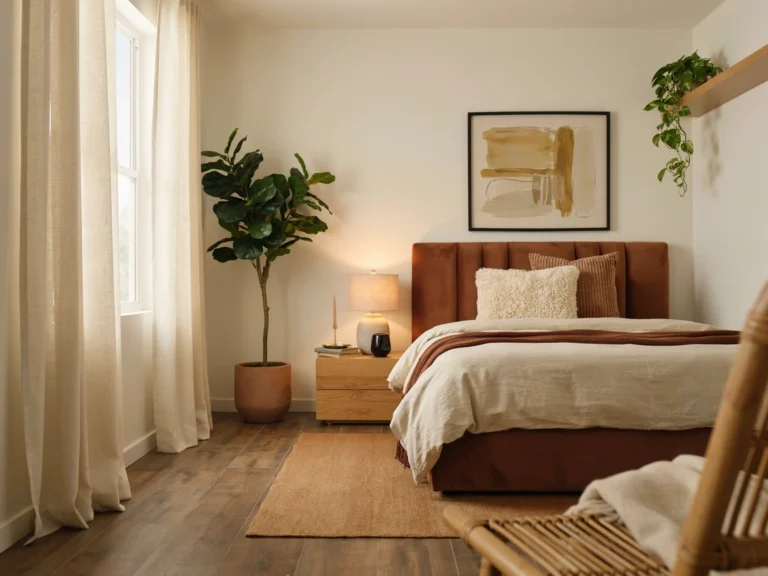
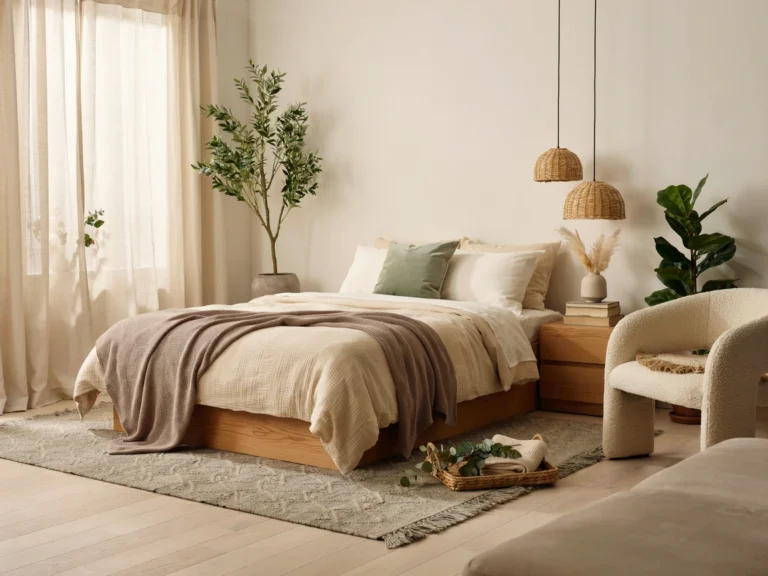
20 Japandi Bedroom Ideas for a Calm, Beautifully Uncluttered Space
My bedroom used to feel busy no matter how much I tidied it — too many pillows, too many “just in case” pieces. Japandi fixed that by teaching me to choose less, but better. It blends Japanese restraint with Scandinavian warmth, so the room stays calm without feeling cold or empty.Here are 20 real, doable Japandi bedroom ideas — for small rooms, big budgets, tight budgets, and everything between. Pick one or two to start, and watch your space finally feel finished.

Start With a Whisper-Quiet Neutral Palette

A soft, neutral base is where every Japandi bedroom begins. Warm whites, oat, and muted greige make a small room feel bigger and a busy mind feel calmer. Skip anything bright or high-contrast — the walls should recede, not compete.
Paint alone won’t do it though. Bedding, curtains, and rugs need to stay in the same tonal family so the whole room reads as one soft, breathing surface instead of separate decorated pieces.If warm neutrals are calling your name, these earthy bedroom ideas lean into that same soft, grounded palette even further.
- Choose matte or eggshell paint finishes for a soft, non-glare look
- Stick to warm white, oat, or soft greige as your base
- Test swatches for 2–3 days before committing
- Keep flooring and rugs in the same warm tone family
- Add one muted accent color max (sage or terracotta)
Choose a Low-Profile Platform Bed

A low, solid-wood platform bed is the single most recognizable Japandi furniture piece. It grounds the room visually and echoes the close-to-the-floor feel of traditional Japanese sleeping spaces, paired with Scandinavian simplicity in the frame itself.
Skip tall headboards and ornate frames. A clean-lined bed, 40–50 cm off the ground, instantly makes the ceiling feel higher and the whole room feel more spacious and calm.
- Look for solid oak, walnut, or light ash wood frames
- Keep the frame under 50 cm high for that grounded look
- Avoid tufted, carved, or glossy finishes
- Pair with low, matching nightstands for visual balance
- Add a woven bed skirt if you need hidden under-bed storage
Layer in Natural Textures
Texture does the emotional heavy lifting in a Japandi room. Linen, raw wood, stone, and woven fiber all add warmth without adding visual clutter, which is exactly the balance this style is built on.
Start small if you’re unsure — one linen duvet cover or one jute rug is enough to shift the whole feel of a room toward calm, tactile comfort.
- Layer linen sheets with a chunky wool or knit throw
- Add a jute or sisal rug underfoot
- Use a raw wood tray or stone bowl on the dresser
- Mix no more than 3 textures per room
- Choose curtains in raw linen over synthetic fabric
Build a Soft, Layered Lighting Scheme

Harsh overhead light is the fastest way to ruin a Japandi bedroom. Warm, layered lighting — a soft ceiling fixture, a small lamp, maybe a wall sconce — creates the cozy, low-glare feel this style depends on.
Dimmers help too. Being able to shift the light from “getting ready” bright to “winding down” warm makes the same room feel like two very different spaces.
- Use warm 2700K bulbs throughout the room
- Add a small table lamp near the bed
- Install a dimmer switch if your fixture allows it
- Try a paper or linen pendant shade for softness
- Avoid cool white or bright LED overhead lighting
Quick Designer Tip: Layer three light sources minimum — overhead, table, and one accent — so no single light feels harsh.
Create One Clear Focal Point

Every Japandi bedroom needs a single visual anchor — usually the bed, sometimes a window or a piece of art. Trying to make everything stand out just creates visual noise and undoes the calm you’re going for.
Let the bed do the work with simple layered bedding, then keep everything else — walls, shelves, nightstands — deliberately quiet in comparison.
- Style the bed as your main focal point with layered linens
- Or highlight one statement window with sheer curtains
- Avoid competing accent walls and bold art in the same room
- Keep the wall behind the focal point mostly empty
- Choose one large mirror over several small frames
Add Texture Through Rugs and Throws

A natural fiber rug and a textured throw are two of the easiest, lowest-cost Japandi upgrades. They soften the room instantly without adding clutter or committing to anything permanent.
Layer a smaller rug over a larger one near the bed for a boutique-hotel feel, and drape a throw loosely across the foot of the bed or a reading chair.
- Choose jute or wool rugs over synthetic blends
- Layer two rug sizes for depth
- Add one chunky knit throw at the foot of the bed
- Keep rug and throw colors within the same neutral family
- Vacuum and rotate rugs seasonally to keep texture fresh
Hide the Clutter With Smart Storage

Clutter is the fastest way to break the Japandi mood. The trick isn’t owning less — it’s storing smarter, so surfaces stay clear even when your closet is full.
Under-bed drawers, closed baskets, and simple wall shelves let you keep everything you need without any of it being visible day to day.
- Use flat under-bed bins for off-season clothes
- Add closed woven baskets instead of open bins
- Install one simple floating shelf instead of a bulky dresser
- Keep the nightstand drawer for daily clutter catch-all
- Do a 10-minute reset every evening to clear surfaces
Bring the Outdoors In With Simple Greenery

One low-maintenance plant does more for a Japandi bedroom than a dozen decor pieces. It softens hard lines, adds a living element, and reinforces the nature-forward core of the whole style.
Skip flashy or flowering plants — the calmest choices are quiet, structural greens like snake plants or pothos, placed near natural light.
- Choose snake plant, pothos, or peace lily for low upkeep
- Place plants near a window for natural light
- Use one simple ceramic or woven planter, not plastic
- Add a small vase of dried or fresh stems as an alternative
- Wipe leaves monthly to keep them dust-free and glossy
Keep Your Palette to Three Tones Max

A tight color palette is what makes Japandi rooms feel intentional instead of random. Pick a base neutral, a warm wood tone, and one soft accent — then stop there.
Every new item you bring in should fit one of those three tones. This single rule prevents the “slowly getting cluttered” drift that happens in most bedrooms over time.
- Choose one neutral, one wood tone, one accent color
- Test new decor against your 3-tone rule before buying
- Use the accent color sparingly — a vase, a throw, not furniture
- Avoid introducing a fourth “just this once” color
- Revisit your palette each season instead of adding to it
Quick Designer Tip: Photograph your room in black and white — if it still looks balanced, your palette is working.
Use Subtle, Organic Patterns Sparingly

Pattern isn’t off-limits in Japandi — it just needs to whisper instead of shout. Small geometric weaves, subtle stripes, or organic textures work; bold prints and busy motifs don’t.
One patterned throw pillow or a woven wall hanging is usually enough. The goal is quiet interest, not a focal point competing with the rest of the room.
- Choose one patterned textile per room, not several
- Stick to tone-on-tone patterns in the same color family
- Try a woven wall hanging instead of printed wallpaper
- Avoid large-scale or high-contrast prints entirely
- Let pattern live in soft goods, not furniture or walls
Make the Bed the Undeniable Centerpiece

A well-made bed can carry an entire Japandi room on its own. Quality linen, a mix of pillow sizes, and one textured throw make it feel like a hotel suite instead of just furniture.
Even on busy mornings, a 60-second fluff-and-fold routine keeps the bed looking intentional, which anchors the whole room’s calm.
- Invest in one high-quality linen or cotton duvet set
- Mix 2–3 pillow sizes for a layered, cozy look
- Add one folded throw at the foot for texture
- Fluff pillows and straighten linens each morning
- Wash bedding weekly to keep textures soft and inviting
Add Personal Touches Without Breaking the Calm

Japandi isn’t cold or impersonal — it just asks you to be selective. A framed photo, a favorite book stack, or a handmade bowl adds warmth without pulling the room back into clutter.
Rotate these pieces seasonally instead of adding new ones on top of old. It keeps the space feeling personal and fresh at the same time.
- Display one or two framed photos, not a full gallery
- Keep a small stack of favorite books on the nightstand
- Add one handmade or sentimental object per surface
- Rotate personal items every season instead of accumulating them
- Store extra keepsakes in a drawer, not on display
Frame Windows Simply and Let Light Lead

Heavy drapes work against everything Japandi stands for. Light linen or cotton curtains, hung high and wide, let in soft daylight and make the window itself feel like part of the decor.
Keep the windowsill nearly empty — one small plant or vase is enough — so the light stays the star of that corner.
- Choose sheer or lightweight linen curtains in neutral tones
- Hang curtain rods higher and wider than the frame
- Keep the windowsill clear except for one small accent
- Avoid heavy blackout drapes in the main living area
- Add wooden or bamboo blinds for texture if needed
Try a Rental-Friendly Japandi Refresh

No paint, no drilling, no problem. Renters can get the Japandi look with removable elements — a large jute rug, tension curtain rods, and swapped-out bedding do most of the visual work.
Adhesive hooks, a folding screen, and a plug-in floor lamp finish the look without touching a single wall permanently.
- Use a large area rug to warm up rented flooring
- Try tension rods instead of drilled curtain hardware
- Add a plug-in floor lamp for warm ambient light
- Use adhesive hooks for light wall art
- Bring in a folding screen for texture or division
Quick Designer Tip: Command strips rated for your wall type hold lightweight art beautifully without damage.
Design a Budget Japandi Bedroom Under $200

You don’t need designer furniture to get this look. One good linen duvet set, an affordable jute rug, and a warm-toned lamp cover the three pillars — texture, calm color, warm light — for well under $200.
Thrift stores and marketplace listings are goldmines for the simple wood pieces this style depends on, often at a fraction of retail price.
- Prioritize bedding and rug over furniture first
- Shop secondhand for simple wood nightstands and trays
- Choose one warm lamp over expensive overhead fixtures
- Skip trendy accent pieces that won’t last
- Repaint one existing piece instead of buying new
Go Luxury With a Splurge-Worthy Japandi Suite

For a higher-end version, invest in solid wood furniture, a genuine linen bedding set, and one designer lighting piece. The materials do the talking here — nothing loud, just visibly high quality.
A large-scale natural stone or ceramic accent piece, paired with a tailored wool rug, brings the boutique-hotel feeling into an everyday bedroom.
- Invest in solid oak or walnut furniture pieces
- Choose 100% linen or organic cotton bedding
- Add one designer pendant or floor lamp as a statement
- Use a large wool or silk-blend area rug
- Select one large-scale ceramic or stone decor piece
Style a Small Japandi Bedroom That Feels Bigger

Small rooms actually suit Japandi beautifully — fewer pieces naturally fit the space better. A low bed, light color palette, and wall-mounted storage keep sightlines open and the floor feeling larger.
Mirrors and vertical storage help too, drawing the eye up and out instead of boxing the room in with bulky furniture.Storage doesn’t have to stop at the bedroom either — these narrow linen closet organization ideas work beautifully with the same closed-basket philosophy.
- Choose a low platform bed to keep sightlines open
- Add one large mirror to visually expand the space
- Use wall-mounted shelves instead of floor dressers
- Stick to a light, monochromatic palette throughout
- Keep furniture count to the true essentials only
Warm It Up for Winter With Cozy Layering

Japandi flexes beautifully with the seasons. In colder months, add an extra wool throw, a heavier knit blanket, and warmer-toned lighting to keep the calm feeling cozy instead of stark.
Swap in a slightly deeper wood tone accent or a warm terracotta candle to bring seasonal richness without breaking your core palette.
- Add a heavier wool or knit blanket for winter
- Swap in warmer bulb tones during darker months
- Introduce one terracotta or rust-toned candle or vase
- Layer a second rug for extra warmth underfoot
- Store lighter summer linens until the season shifts back
Keep It Effortless With a Weekly Reset Ritual

Japandi isn’t a one-time makeover — it’s maintained with small, consistent habits. A ten-minute weekly reset keeps the calm you’ve built from slowly sliding back into clutter.
Set a recurring reminder, put on music, and treat it as self-care rather than chores. The room rewards you with how it feels every single morning after.
- Set a weekly 10-minute tidy reminder
- Return items to their storage home immediately after
- Dust surfaces and fluff bedding during the reset
- Rotate seasonal decor during this same routine
- Do a quick “does this earn its spot” declutter check
Quick Designer Tip: Pair your reset ritual with a specific day, like Sunday evening, so it becomes automatic rather than optional.
FAQs
What colors work best in a Japandi bedroom?
Warm neutrals like white, oat, and soft greige, with one muted accent color such as sage or terracotta used sparingly.
Is Japandi good for small bedrooms?
Yes — its low-furniture, few-pieces approach naturally suits small spaces and makes them feel more open.
How much does it cost to create a Japandi bedroom?
You can start under $200 focusing on bedding, a rug, and lighting, or go higher-end with solid wood furniture and designer pieces.
Can I do Japandi in a rental?
Absolutely — rugs, tension rods, plug-in lighting, and removable hooks get the look without any permanent changes.
How is Japandi different from regular minimalism?
Japandi adds warmth and natural texture to minimalism’s simplicity, so the room feels cozy rather than stark or empty.
Conclusion
Japandi isn’t about buying more — it’s about learning to choose what actually earns a place in your room. The quiet palette, the low bed, that one linen throw you keep reaching for — none of it happens overnight, and that’s the point. Real calm is built slowly, one considered choice at a time.
Start small. Pick just one or two ideas from this list — maybe the neutral palette, maybe the lighting — and live with them for a week before adding more. You’ll notice it in small ways first: a quieter morning, a room that finally feels settled instead of scattered.
That’s really what Japandi promises. Not a perfectly styled photo, but a bedroom that feels like an exhale every time you walk in.