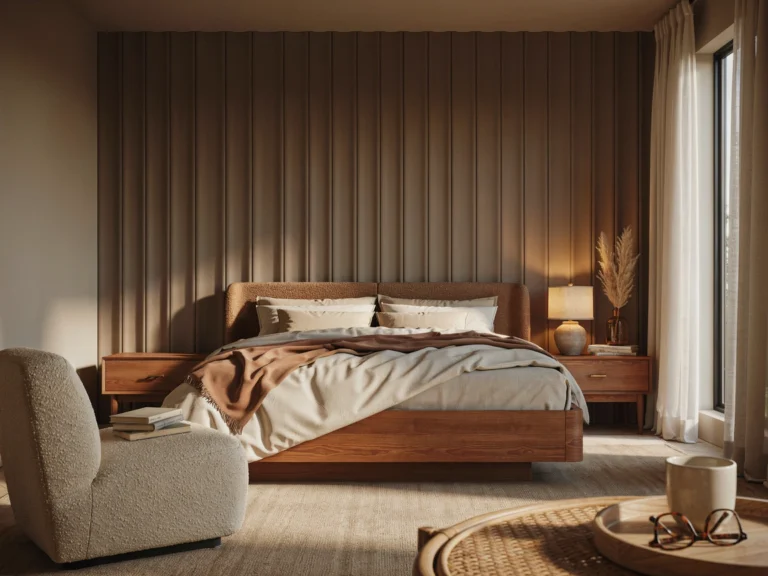
21 Basement Bedroom Ideas That Feel Anything But Basement
You head downstairs, flip on the one overhead light, and the room just sits there — cold, a little damp-smelling, and somehow still unfinished no matter how many throw pillows you add. The concrete floor feels cold underfoot, the low ceiling makes it feel smaller than it is, and no matter what color you paint the walls, it still reads as “basement” instead of “bedroom.”
The real problem isn’t decor — it’s that a basement bedroom fights you on three fronts at once: low or no natural light, low ceiling height, and moisture that regular decorating tips never account for. Most basement bedroom guides skip straight to throw blankets and candles without solving any of that first.
Below are 21 basement bedroom ideas organized around the actual problems a basement throws at you, plus real budget numbers most articles leave out entirely. By the end, you’ll know exactly where to start — and what to fix first.

Is Your Basement Room Actually a Legal Bedroom First?
Before you spend a single dollar on decor, it’s worth checking whether your basement room technically qualifies as a bedroom, since this affects resale value and insurance down the line. Most U.S. building codes (via the International Residential Code) require a legal bedroom to have an egress window large enough to climb through in an emergency, plus a minimum ceiling height, usually around 7 feet.
If your room doesn’t meet those requirements, that’s completely fine — just call it a guest room or flex room instead of a bedroom when listing your home or talking to an appraiser. It doesn’t change how you decorate it at all, but it does matter for paperwork and safety later.
If you’re layering multiple light sources for that same glow-y, cozy effect, this bedroom lighting ideas guide has more layout options worth borrowing.
- Confirm your window meets local egress size requirements
- Measure ceiling height at its lowest point, not the average
- Check with your local building department if you’re unsure
- Decorate the same either way — this only affects labeling
Solve the Basement-Specific Problems First
1. Fix a Musty, Damp Feel Before You Decorate

Basements trap humidity more than any other room in the house, and that trapped moisture is exactly what causes peeling paint, warped baseboards, and that persistent musty smell no matter how nice the furniture is. A dehumidifier set to keep humidity between 30-50% solves most of this before it ever becomes a decorating problem.
Pair the dehumidifier with a moisture-resistant paint formula rather than a standard one, since basement walls absorb ambient humidity even with good ventilation. This one fix protects every other update on this list, so it’s worth doing before anything else.
Expert Tip: A humidity level above 60% is when mold risk really climbs, so a $30 hygrometer is worth adding to your basement bedroom before you buy anything decorative.
- Run a dehumidifier set to 30-50% humidity
- Choose moisture-resistant, mold-inhibiting paint
- Avoid heavily textured wallpaper in damp basements
- Check window wells and seals for leaks first
2. Choose the Right Paint LRV for Low Natural Light

Contrary to instinct, stark white paint often looks flat and gray in a basement instead of bright, because it has nothing warm to reflect. Look for a paint with a light reflective value (LRV) between 50-70 for basement bedrooms — high enough to bounce available light, warm enough to avoid a sterile or clinical look.
If your basement only gets a sliver of natural light through a window well, lean toward a warm greige or soft warm white rather than a cool-toned white, since cool tones read as colder and dimmer in low-light spaces. This one paint decision affects how the whole room feels more than almost anything else on this list.
Love how a soft blue palette opens up a smaller room? These coastal blue bedroom ideas work just as well in sunlit, above-ground spaces.
- Choose a paint with LRV between 50-70
- Favor warm undertones over cool, stark white
- Test swatches at different times of day
- Pair with a satin or eggshell sheen, not flat
3. Bounce Light Around with a Well-Placed Mirror

If your basement bedroom has little or no natural light, a large mirror positioned to face the window or the brightest light source does more for the room’s brightness than almost any other single change. It reflects available light back into the room instead of letting it dead-end at a wall.
Even a simple, affordable floor-leaning mirror works here — it doesn’t need to be elaborate to make a real difference. Position it opposite your main light source rather than tucked in a corner, since that’s where it earns its keep.
- Position the mirror opposite the window or main light
- A full-length leaning mirror needs no wall damage
- Round or arched shapes soften a boxy basement room
- Pair with a warm-toned frame for extra coziness
4. Trick the Eye on Low Ceilings with Matched Millwork

Basement ceilings are almost always lower than the rest of the house, which can make the whole room feel more cramped than it actually is. Painting the baseboards, trim, and any crown molding the exact same color as the walls removes the visual line that draws the eye upward and highlights the low height.
This is a small, low-cost trick that designers use constantly, and it works especially well in basement bedrooms where every inch of visual height matters. Skip the contrast trim entirely here, even if you use it elsewhere in the house.
- Paint baseboards and trim the same color as walls
- Skip contrast trim, even a favorite color elsewhere
- Use vertical elements like tall curtains to draw the eye up
- Keep furniture lower-profile where ceilings are lowest
5. Warm Up Cold Concrete with the Right Flooring

A basement bedroom sitting directly over a concrete slab needs a flooring choice that actually feels warm underfoot, not just one that looks good. Here’s how the most common options compare for a basement bedroom specifically:
| Flooring | Cost (per sq ft) | Warmth Underfoot | Moisture Resistance |
|---|---|---|---|
| Vinyl plank | $2-$5 | Moderate | Excellent |
| Carpet tile | $2-$6 | High | Good |
| Engineered hardwood | $4-$9 | Moderate | Fair |
| Heated flooring add-on | +$8-$15 | Excellent | Good |
Vinyl plank is the most forgiving choice for basements prone to occasional dampness, while carpet tile feels the warmest underfoot but needs a moisture barrier underneath in humid climates. A large area rug over any hard flooring closes most of the remaining warmth gap affordably.
- Choose vinyl plank for the best moisture resistance
- Add carpet tile for the warmest feel underfoot
- Always install a moisture barrier first on concrete
- Layer a large area rug regardless of flooring choice
6. Dress the Egress Window Like a Real Window

An egress window well can look small, awkward, or purely functional if it’s left bare, but treating it like any other window in the house makes an enormous difference. A simple curtain panel, even a short one, softens the frame and makes the window feel intentional rather than incidental.
If your window well shows dirt, gravel, or the well liner itself, a faux window treatment or frosted film keeps the focus on the curtain rather than what’s outside it. This small fix changes how “finished” the whole wall looks.
A canopy frame can add the same softness overhead — see how it’s styled in these canopy bedroom ideas.
- Add a curtain panel, even a short one, to soften the frame
- Use frosted film if the window well view isn’t attractive
- Keep the window clear of furniture blocking emergency access
- Match the curtain hardware finish to the rest of the room
7. Layer Lighting Instead of Relying on One Fixture

A single overhead light is the fastest way to make a basement bedroom feel flat, clinical, and uninviting no matter how nicely it’s decorated otherwise. Layering in a wall sconce, a floor lamp, and a table lamp alongside any overhead lighting creates warmth and depth that one fixture alone never can.
Warm white bulbs (2700-3000K) make a noticeably bigger difference in a basement than in an above-ground room, since there’s no daylight competing to balance out a cooler bulb tone. This is one of the most impactful, lowest-cost changes on this entire list.
- Add at least two lamps in addition to overhead lighting
- Use warm white bulbs (2700-3000K), not daylight bulbs
- Place a sconce near the bed for reading light
- Put lamps on dimmers where possible for flexibility
Style Ideas for a Basement Bedroom
8. Farmhouse Basement Bedroom Style

If the rest of your home leans traditional or country-style, a farmhouse-inspired basement bedroom will feel like a natural extension rather than an odd, disconnected space. Shiplap on one accent wall, black hardware, and warm wood furniture bring in the rustic warmth farmhouse style is known for, which also happens to counteract a basement’s naturally cool, closed-off feel.
Keep metal finishes limited to one or two options throughout the room, and lean on woven baskets for practical storage that doubles as texture. This style works especially well in basements with visible structural quirks, since shiplap easily disguises support beams or uneven walls.
- Shiplap or wainscoting on one accent wall
- Matte black hardware and light fixtures
- Warm wood furniture, vintage if possible
- Woven baskets for texture and practical storage
9. Modern Minimalist Basement Bedroom Style

A modern minimalist approach strips a basement bedroom back to just what matters, which works particularly well in a room that’s already visually competing with low ceilings and limited light. A smooth painted wall, one statement piece of furniture, and clean lines create a calm, uncluttered look that won’t feel dated in a few years.
Fewer items on display means less visual noise fighting for attention in a room that doesn’t have square footage to spare. A single well-chosen piece of art and one decorative object will do more here than five smaller accessories ever could.
Tight on square footage? Pair your layout with smart, space-saving picks from these bedroom storage ideas.
- Smooth painted walls in a warm neutral tone
- One statement furniture piece, kept simple
- Matte black or brushed nickel hardware
- Just one or two decorative objects, nothing more
10. Moody & Dramatic Basement Bedroom Style

A basement bedroom is actually one of the best places in the house to go moody and dramatic, since the lack of natural light means there’s no daylight to fight the effect. Dark, warm-toned paint paired with brass fixtures and strong layered lighting creates a cocoon-like feel that reads as intentional rather than dim.
This look depends completely on strong lighting to succeed, since a dark room without enough brightness just looks gloomy instead of designed. Add at least two warm light sources before committing to a dark wall color.
Expert Tip: Dark basement walls only work with genuinely strong layered lighting — add the lamps and sconces before you commit to the paint color.
- Dark, warm-toned paint (deep green, chocolate, or navy)
- Brass or warm gold fixture finishes
- At least two warm light sources per wall
- Rich textiles like velvet or bouclé for contrast
11. Warm Wood Tones for an Earthy Feel

Never underestimate how much warm wood does to counteract a basement’s naturally cool, concrete-adjacent feel. A vintage wood bed frame, wood nightstands, or even a single wood accent chair adds visual warmth that pairs well with almost any style on this list.
Mixing a couple of different wood tones actually looks more collected than matching everything perfectly, as long as the undertones (warm vs. cool) stay consistent throughout the room. This is an easy, high-impact upgrade if you’re starting with secondhand or thrifted furniture.
- Choose furniture with warm, not gray-toned, wood
- Mix two wood tones max, keep undertones consistent
- A vintage wood headboard adds character affordably
- Pair with warm textiles to double down on coziness
12. Layer Cozy, Textural Bedding

From a down duvet insert to a waffle-weave throw and a matelassé coverlet, layering bedding textures does more to make a basement bedroom feel inviting than almost any other single decor choice. It’s also one of the most affordable upgrades on this entire list.
Stick to warm neutral or earthy tones for the base layer, then add one textured throw and two to three pillows in a slightly bolder accent color or pattern. This keeps the look cozy without tipping into cluttered.
For a cleaner, more modern spin on the same warmth, browse these contemporary bedroom ideas.
- Layer a duvet, coverlet, and one textured throw
- Keep the base neutral, add one accent color
- Two to three pillows is plenty for a small bed
- Choose natural fibers (cotton, linen) over synthetic
13. Add a Soft Area Rug for Warmth Underfoot

Having a soft place for feet to land instead of a cold basement floor is one of the simplest comfort upgrades you can make. A large area rug, or a smaller sheepskin layered on top of a bigger rug, adds both warmth and a finished, intentional look to the room.
Choose a rug large enough that the bed’s front legs sit on it, since a too-small rug makes the whole room look under-furnished rather than cozy. Wool and wool-blend rugs hold up best against basement humidity compared to natural fiber options like jute.
- Size the rug so the bed’s front legs sit on it
- Choose wool or wool-blend for basement humidity resistance
- Layer a smaller sheepskin on top for extra texture
- Avoid jute or sisal in consistently damp basements
14. Make a Statement with Oversized Artwork

One of the fastest ways to distract from a basement’s structural quirks is to install a genuinely large, impressive piece of artwork as a focal point. Oversized art draws the eye upward and outward, which works especially well opposite a low ceiling or an awkward support beam.
A single large piece almost always looks more intentional than a small cluster of mismatched frames in a basement bedroom specifically, since it reads as a deliberate design choice rather than an afterthought. Choose a piece with warm tones to reinforce the room’s overall coziness.
- Choose one large piece over several small frames
- Hang it opposite the door or the lowest ceiling point
- Warm-toned artwork reinforces a cozy basement feel
- Center it above furniture, not floating alone on a wall
15. Add Personality with Vintage Furniture

Vintage or secondhand furniture brings a level of character to a basement bedroom that new furniture rarely matches, and it’s often more affordable too. A thrifted bed frame, an antique dresser, or mismatched vintage nightstands add instant warmth and story to an otherwise plain space.
Facebook Marketplace, estate sales, and local thrift shops are the best places to find these pieces without paying retail prices. Don’t worry about a perfectly matched set — a few well-chosen vintage pieces almost always look more collected than a uniform new bedroom set.
- Source vintage pieces from Marketplace or estate sales
- Mismatched nightstands look intentional, not incomplete
- Refinish or repaint pieces that need a small update
- One vintage statement piece is enough to set the tone
16. Plan Smart Storage for Small or Awkward Layouts

Basement bedrooms often come with support poles, low headroom zones near stairs, or oddly angled walls that make furniture placement tricky. Planning storage around these constraints, rather than fighting them, makes the room feel more functional and less cramped.
A dresser tucked into a low headroom zone where you wouldn’t stand anyway, or a storage ottoman at the foot of the bed, adds function without eating into usable floor space. A folding luggage rack is a small, inexpensive addition that makes a real difference for overnight guests.
- Place tall furniture only where ceiling height allows standing
- Use a storage ottoman for dual-purpose seating and storage
- Add a folding luggage rack for guest convenience
- Work around support poles rather than trying to hide them
17. Add Upholstery for a Lived-In Feel

A single upholstered chair, bench, or headboard softens a basement bedroom’s harder surfaces (concrete-adjacent flooring, drywall, low ceilings) and adds a lived-in, residential feel rather than a utilitarian one. It also provides functional seating for a guest room, which most basement bedrooms lack entirely.
A bouclé or velvet bench at the foot of the bed does double duty as a place to set luggage or a place to sit while getting dressed. Choose a warm, textural fabric here rather than a slick or cool-toned one.
- One upholstered piece is enough for a small room
- Bouclé or velvet adds warmth and texture
- Place a bench at the foot of the bed for function
- Avoid slick or cool-toned fabrics in a basement setting
18. Stock the Room for Overnight Guests

If this basement bedroom doubles as a guest room, a few thoughtful comforts make guests feel genuinely taken care of rather than just given a place to sleep. A folded heated blanket in a basket, a small stack of extra towels, and a nightstand charging station cover the basics most hosts forget.
Since basements run cooler than the rest of the house, an extra blanket or a small space heater tucked in a closet is especially appreciated here compared to an above-ground guest room. A handwritten note with the WiFi password is a small touch that goes a long way.
- Keep an extra blanket or heated throw accessible
- Add a charging station on the nightstand
- Provide a small stack of towels for overnight stays
- Leave a note with WiFi password and any house info
Real Budget Tiers for a Basement Bedroom Makeover
19. Under $100 Quick Refresh
A genuinely noticeable refresh doesn’t require a big investment. New bedding, a couple of warm-white bulb swaps, a curtain panel for the egress window, and a $30 hygrometer to monitor humidity can make the room feel considerably more cared for almost overnight.
This tier is ideal if you’re testing whether the room needs more investment before committing further, or if you just want a quick weekend refresh. Prioritize the humidity check and bulb swap first, since both affect how the room feels more than any purely decorative purchase would.
- New bedding layers in warm, neutral tones
- Warm-white (2700-3000K) bulb swap throughout
- One curtain panel for the egress window
- A $30 hygrometer to monitor humidity levels
20. $100–500 Mid-Range Upgrade
Once there’s a bit more room in the budget, a dehumidifier, a large area rug, a floor lamp, and a gallon of the right LRV paint start to add up to a genuinely different-feeling room. This tier addresses the basement’s actual structural challenges, not just its surface appearance.
Spend this tier’s budget on the dehumidifier and paint first, since both solve root problems (moisture and light) that decor alone can’t fix. The area rug and lighting round out the comfort factor once those fundamentals are handled.
- A dehumidifier sized for the room’s square footage
- One gallon of warm-toned, high-LRV paint
- A large area rug for warmth underfoot
- An additional floor or table lamp for layered light
21. $500+ Statement Basement Makeover
If you’re ready to invest more in this space, this tier covers new flooring, a vintage or new bed frame, upholstered seating, and a full lighting overhaul — pushing the room from “decorated” into “genuinely finished.” This is the right tier if the room will be used regularly, either as a primary bedroom or a frequent guest space.
Prioritize flooring and the bed frame over smaller accessories at this budget level, since those two elements affect comfort and first impression more than anything else in the room. This tier is also the point where it’s worth double-checking the egress and ceiling height requirements from earlier, especially if resale value matters to you.
- New moisture-resistant flooring (vinyl plank or engineered hardwood)
- A quality bed frame, vintage or new
- One upholstered seating piece
- A full layered lighting overhaul (sconce, floor lamp, table lamp)
Common Mistakes to Avoid
The most common mistake in basement bedroom decorating is addressing the decor before the humidity, since no amount of styling fixes a room that still smells musty. Choosing a stark white or cool-toned paint in a room with little natural light is a close second, since it almost always reads as flat and gray instead of bright.
Relying on a single overhead light is another frequent misstep, as is ignoring the egress window entirely and leaving it bare and unstyled. Finally, don’t skip checking your local code requirements if you plan to market the room as a bedroom rather than a flex space later on.
- Fix moisture and humidity before decorating anything
- Avoid stark white or cool-toned paint with low natural light
- Never rely on a single overhead light source
- Confirm egress and ceiling height if calling it a “bedroom”
FAQs
Is it OK to have a bedroom in the basement?
Yes, as long as it meets local building code requirements for a legal bedroom, which typically include an egress window large enough for emergency exit and a minimum ceiling height. If it doesn’t meet those requirements, you can still decorate and use it as a bedroom — just avoid listing it as one for resale purposes.
What makes a basement bedroom legal?
Most codes require an egress window (a window large enough to climb through in an emergency) and a minimum ceiling height, often around 7 feet. Requirements vary by location, so check with your local building department to confirm before making any structural changes.
How do you keep a basement bedroom from feeling damp?
Run a dehumidifier to keep humidity between 30-50%, use moisture-resistant paint, and avoid heavily textured wallpaper or natural fiber rugs like jute that hold onto moisture. Checking window wells and seals for leaks is also worth doing before decorating.
What color should I paint a basement bedroom?
Look for a warm-toned paint with a light reflective value (LRV) between 50-70, which reflects available light without looking sterile or cold. Stark white or cool-toned colors tend to read as flat and gray in rooms with limited natural light.
How do you add light to a basement bedroom with no windows?
Layer in a wall sconce, floor lamp, and table lamp with warm-white bulbs (2700-3000K) in addition to any overhead lighting, and position a large mirror to reflect whatever light source is available. This combination does more than any single fixture change alone.
What flooring is best for a basement bedroom?
Vinyl plank offers the best moisture resistance for basements prone to occasional dampness, while carpet tile feels warmer underfoot but needs a moisture barrier in humid climates. A large area rug layered over either option closes most of the remaining warmth gap.
Does a basement bedroom need a window?
If you want it to legally qualify as a bedroom, yes — most codes require an egress window for safety. If it’s being used informally as a guest room or flex space, a window isn’t strictly necessary, though natural light does make the room feel more comfortable.
Conclusion
A basement bedroom doesn’t need a full renovation to feel genuinely warm and inviting — it needs its actual problems solved first. Handling moisture, choosing the right paint LRV, and layering in proper lighting will do more for how the room feels than any amount of decor added on top of unsolved basement issues.
Once those fundamentals are in place, the styling choices — warm wood tones, cozy textiles, a well-placed mirror — are what take the room from merely functional to genuinely finished. With the right approach, even a room below ground level can feel like one of the coziest spaces in the whole house.