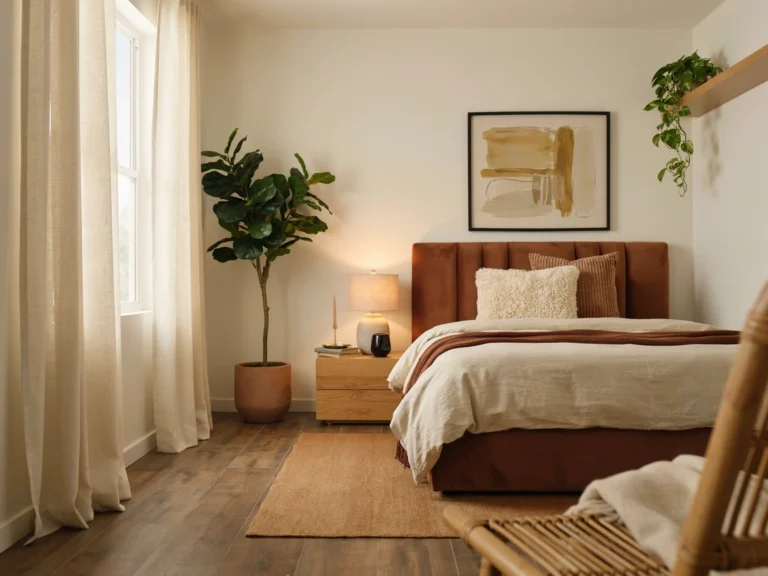
20 Cozy Bedroom Lighting Ideas for Every Budget
There’s a specific kind of tired that comes from lying in bed under one bright overhead light, staring at the ceiling instead of drifting off. If your bedroom looks fine in photos but never quite feels relaxing at night, the lighting is almost always the reason. Most bedrooms rely on a single ceiling fixture to do everything, and that’s the problem — one light can’t set a mood, help you read, and calm you down all at once.
Good bedroom lighting works in layers, and it doesn’t have to cost a lot to get right. Below are 20 real bedroom lighting ideas, from cozy ambient glow to smart bulbs to renter-friendly fixes that need zero wiring, so you can find what fits your space, your style, and your budget.

How Bedroom Lighting Actually Works
Before you pick a fixture, it helps to understand the three layers a good bedroom uses: ambient light for overall brightness, task light for reading or getting dressed, and accent light for mood and warmth. You don’t need all three in every corner, but mixing at least two usually makes a room feel finished instead of flat. Warmer bulbs, in the 2700K to 3000K range, tend to feel cozier at night than cooler daylight bulbs, which is worth remembering as you shop.
20 Bedroom Lighting Ideas to Try
1. Start With Layered Lighting, Not One Big Fixture

The biggest shift you can make is mental, not physical: stop expecting one ceiling light to carry the whole room. A lamp on the nightstand, a soft accent somewhere else, and one main source together create depth that a single bulb never will.
Start small. Add one warm lamp to whatever lighting you already have and turn off the overhead light one evening to see the difference. From there, add a second source, like a plug-in sconce or floor lamp, wherever the room still feels flat.
A fixture this bold works best in a room with confident furniture and color choices already in place — see our master bedroom decor ideas for pairings that can carry it.”
Why it works: This fixes the “harsh and flat” feeling most bedrooms struggle with, without buying a single new fixture yet.
- Aim for at least two separate light sources at different heights
- Turn off the overhead light and see what’s actually missing
- Save new purchases for gaps, not for replacing what already works
2. Backlit Wooden Headboard

A soft strip of warm light hidden behind a wood headboard washes the wall behind the bed in a gentle glow, so the room quiets down the second the main lights go off. It reads as intentional and a little luxurious, without looking like a fixture at all.
Use a thin LED strip mounted to the back of the headboard or the wall directly behind it, angled so the light spills outward rather than shining forward. Warm white bulbs matter more here than anywhere else in the room, since this glow becomes your main ambient light at night.
“If you’re dealing with an angled or sloped ceiling specifically, our slanted ceiling bedroom ideas guide covers more fixes beyond lighting alone.”
Why it works: It replaces a bedside lamp’s function while looking built-in and expensive.
- Use warm white (2700K) strip lighting, not bright white
- Angle the strip to hit the wall, not your eyes
- Renters can use adhesive-mount strips instead of hardwiring
3. Plug-In Wall Sconces for Renters

Sconces usually mean drilling into drywall and running wire, which rules them out for a lot of renters. Plug-in versions solve that. They mount with adhesive hooks or small nails, and the cord tucks along the wall or behind the headboard so it barely shows.
Look for sconces with a visible cord kit designed for this exact use — many are styled to look hardwired once installed. Position them at or just above eye level when sitting up in bed, angled slightly toward the wall for a softer wash of light.
Why it works: You get the built-in look of hardwired lighting with zero electrical work and no lost deposit.
- Choose sconces made specifically for plug-in cord kits
- Hide the cord along the headboard or under a rug channel
- Mount slightly above headboard height for the most flattering glow
4. Statement Pendant Over the Nightstand

Swapping a bedside lamp for a single hanging pendant frees up nightstand surface for books, water, or a candle, and it gives the room a more custom, designed feel. It works especially well in smaller bedrooms where table space is limited.
Hang the pendant so the bulb sits roughly at eye level when you’re lying down or a few inches above headboard height. A cord with an adjustable drop length gives you room to fine-tune this later, which matters more than most people expect on the first try.
Why it works: It solves a small-nightstand problem while adding a genuine design moment to the room.
“This layered, low-glow approach is especially worth pairing with a deep wall color — see how it plays out in our dark green bedroom ideas.”
- Choose an adjustable cord length, not a fixed one
- Keep the bulb warm-toned to avoid a stark, clinical feel
- Best for one side of the bed if space is tight, not always a matching pair
5. Budget Bedside Lamp With a Fabric Shade

You don’t need an expensive lamp to get a warm, flattering glow. A basic ceramic or wood base with a linen or cotton shade softens the light naturally, which matters more for mood than the price tag does.
Keep the lamp at roughly mattress height so the light falls where you actually read or sit up, instead of glaring across the room. A warm 40-60 watt equivalent bulb is usually enough — brighter isn’t better here.
Why it works: Proves that a cozy bedroom doesn’t require a design-store budget.
- Fabric or linen shades diffuse light better than glass or metal
- Keep the lamp near mattress height, not much higher
- One well-placed lamp beats two mismatched ones
6. Dimmable Smart Bulbs for Mood Control

A smart bulb screwed into a fixture you already own instantly gives you control over brightness and warmth without any new wiring or hardware. You can dim for winding down at night and brighten for getting dressed in the morning, all from the same fixture.
Most smart bulbs work with a simple app or voice assistant, and many let you schedule the room to dim each evening automatically. This is one of the easiest upgrades in this whole list, since it works with fixtures and lamps you already have.
Why it works: Solves the “one light, one brightness” problem cheaply and without any installation.
- Look for bulbs with adjustable color temperature, not just dimming
- Set an automatic evening dim schedule if your app supports it
- Works in existing lamps and fixtures — no new hardware needed
7. LED Strip Under-Bed, Glow

A soft ribbon of light under the bed frame makes the whole bed look like it’s floating, and it doubles as a gentle night light if you get up in the dark. It’s a strong, modern look that photographs well for a reason — it’s genuinely striking in person too.
Attach an adhesive LED strip to the underside of the bed frame, angled downward so the glow spills onto the floor rather than shining outward. This works best with a platform bed or frame with visible clearance underneath.
Why it works: Gives you functional night lighting and a distinctive visual without touching the walls or ceiling.
- Angle the strip down toward the floor, not outward
- Best suited to platform beds with visible under-bed space
- Keep it dim — this is an accent, not a main light source
8. Symmetrical Bedside Sconce Pair

Matching sconces on either side of the bed create a sense of balance that’s hard to get any other way. It’s a classic look for a reason: even light on both sides makes a room feel calm and settled almost instantly.
Mount the sconces at the same height on each side, ideally just above headboard level, and make sure both use the same bulb color so the light stays consistent across the bed. This works whether the sconces are hardwired or plug-in.
Why it works: Solves uneven lighting for couples or anyone who wants a more polished, put-together look.
- Match height and bulb temperature exactly on both sides
- Mount slightly above headboard height to avoid glare
- Great for freeing up nightstand space entirely
9. Bold Ceiling Chandelier as the Room’s Anchor

In a bedroom with strong furniture and a confident color scheme, a chandelier can be the piece that pulls everything together instead of feeling like overkill. The key is picking one that matches the room’s formality — a delicate crystal piece for a classic room, a sculptural metal one for something more modern.
Center it over the bed or a few feet in front of it, and hang it low enough to feel like part of the room rather than something stuck to the ceiling. Pair it with warm bulbs so it adds atmosphere at night instead of stadium-style brightness.
Why it works: Gives a bedroom a genuine focal point instead of relying only on furniture and art.
- Center the fixture over the bed, not off to one side
- Pair with warm bulbs and a dimmer if your fixture allows it
- Works best when the rest of the room has a few strong pieces already
10. Vertical Wall-Wash Light Panels

Thin vertical strips of light behind the bed draw the eye upward, which makes a room with a low or average ceiling feel noticeably taller. The effect is subtle, but it changes how the whole wall reads, especially at night.
Mount two strips symmetrically on either side of the headboard, running from roughly headboard height to a few feet above it. Diffused, warm-toned strips work better here than anything with a visible bulb or hot spot.
Why it works: A genuine trick for making a room feel bigger without moving any furniture.
- Keep the strips symmetrical for the cleanest effect
- Use diffused panels, not exposed bulbs, to avoid hot spots
- Especially useful in rooms with 8-foot or lower ceilings
11. Battery-Powered Wall Lights for No-Wiring Rooms

If drilling isn’t an option at all — not even for a plug-in sconce — battery-powered wall lights are the easiest fallback. Most attach with adhesive strips or small hooks, run on rechargeable batteries, and can be moved without leaving a mark.
Because there’s no cord to manage, these work well in awkward spots a plug-in fixture couldn’t reach, like the far side of the bed away from an outlet. Look for ones with a warm bulb and a built-in on/off switch rather than a remote you’ll misplace.
Why it works: The most flexible option for renters, dorms, or anyone who can’t run a cord to an outlet.
- Choose rechargeable over disposable-battery models long term
- Great for the side of the bed farthest from an outlet
- Reposition freely since there’s no cord or wiring involved
12. Woven Pendant With a String Light Layer

For a relaxed, lived-in bedroom, mixing a woven or rattan pendant with a soft string of warm lights creates texture without looking cluttered. The natural material softens the light itself, so even a mid-brightness bulb feels gentle.
Hang the pendant as your main light source and drape the string lights somewhere secondary, like along a headboard or shelf, rather than layering them in the same spot. This keeps the look intentional instead of busy.
Why it works: Adds warmth and texture to a room without needing multiple hardwired fixtures.
- Keep string lights secondary, not competing with the main pendant
- Woven shades diffuse light more softly than plastic or metal ones
- Works especially well in boho, natural, or relaxed-style bedrooms
13. Moody Accent Lighting for Dark-Painted Rooms

Dark walls need light that works with the color instead of fighting it. Bright, cool overhead light on a deep green or charcoal wall can feel flat and heavy, but a few low, warm accent lights make the same room feel rich and cozy instead.
Skip the overhead light most nights and rely on two or three low sources instead — a bedside lamp, a warm pendant, and maybe a small accent light near a chair or dresser. Keep every bulb in the room the same warm tone for consistency.
Why it works: Solves the most common complaint about dark bedrooms — that they feel heavy instead of intentional.
- Turn the ceiling light off or very low most evenings
- Keep every bulb the same warm color temperature
- Layer at least two low sources rather than one bright one
14. Swing-Arm Reading Lights for Small Nightstands

If your nightstand barely fits a phone and a glass of water, a wall-mounted swing-arm light solves the space problem completely. It folds close to the wall when not in use and extends over the bed exactly where you need it to read.
Mount it at a height where the arm reaches comfortably over your pillow when extended, usually a foot or two above mattress height. These come in both hardwired and plug-in versions, so renters aren’t excluded from this one either.
Why it works: Frees up your entire nightstand surface while still giving you real reading light.
- Mount high enough that the extended arm clears your pillow
- Look for plug-in versions if you’re renting
- Best for one-sided reading setups more than symmetrical pairs
15. Recessed Ceiling Wash for a Minimalist Room

In a room with clean lines and little visual clutter, recessed lighting keeps the ceiling free of any fixture at all, which suits a minimalist or modern space especially well. The light spreads evenly with no visible source to distract from the room’s simplicity.
This one usually requires an electrician, so it’s more of a renovation-stage idea than a quick weekend fix. If you’re in a position to do it, pair the recessed lights with a dimmer switch so the room can shift from bright and functional to soft and quiet.
Why it works: Keeps a minimalist room visually uncluttered while still fully lit.
- Best planned during a renovation, not a quick fixture swap
- Always pair with a dimmer for evening use
- Suits rooms with little existing ceiling detail or molding
16. Floor Lamp as a Flexible Ambient Source

A floor lamp in the corner of the room fills in ambient light without needing any wall or ceiling work at all, and you can move it wherever the room needs it most. It’s one of the simplest additions on this entire list.
Choose one with a fabric shade for the softest light, and place it in whichever corner currently feels darkest or emptiest. An arc-style lamp can also stretch over a reading chair if you want it doing double duty as task lighting.
Why it works: The easiest, lowest-commitment way to fix a dark corner in any bedroom.
- Fabric shades diffuse light more gently than open or metal ones
- Place it in the room’s darkest, emptiest corner first
- No installation required — ideal for renters or frequent movers
17. Framed LED Wall Outline Behind the Bed

Running a thin LED strip around the outer edge of the wall behind the bed, like a soft glowing frame, gives the space a custom, almost architectural feel without any construction. It works especially well when the wall doesn’t have a real headboard to backlight.
Measure and mark the outline first, then use adhesive-backed strip lighting along the perimeter, keeping the corners as clean as you can. Warm, diffused strips look far more intentional here than anything with visible individual bulbs.
Why it works: Creates a headboard-like focal point on a wall with no actual headboard.
- Plan the outline and measure before sticking anything down
- Use diffused strips, not exposed bulb strings, for a cleaner look
- Great substitute when there’s no real headboard to backlight
18. Warm Hanging Bedside Pendants for a Clutter-Free Look

A single pendant on each side of the bed, hung low and warm, gives you reading light without a single lamp base taking up nightstand space. It’s one of the cleanest-looking bedside options if you like a more pared-back nightstand.
Hang each pendant so the bulb sits close to mattress height, and use a shade that directs light downward rather than out into the room. This avoids glare while you’re lying down and keeps the light focused where you’re actually reading.
Why it works: Solves the “cluttered nightstand” problem completely, especially in smaller rooms.
- Hang low, close to mattress height, not shoulder height
- Choose a downward-facing shade to avoid glare while lying down
- Pairs well with narrow or floating nightstands with little surface space
19. Seasonal Fairy-Light Accent Layer

A simple string of warm fairy lights, tucked along a shelf, mirror frame, or headboard, adds a soft seasonal touch without becoming the room’s main light source. It’s an easy, low-cost way to add coziness for a holiday season or just year-round.
Keep the strand secondary to your main lighting rather than relying on it to light the room, and stick to warm white bulbs instead of colored ones for a more grown-up, cozy effect rather than a decorative one.
Why it works: A five-minute, low-cost way to add warmth to any bedroom style.
- Use warm white bulbs, not colored, for an adult-feeling room
- Keep it as an accent layer, never the main light source
- Battery-powered strands work well since there’s no outlet needed
20. Statement Drop Lighting for High or Sloped Ceilings

A tall or sloped ceiling can swallow a small fixture and leave the room feeling empty overhead. A pendant or chandelier with a longer drop fills that vertical space and actually makes the ceiling height feel intentional instead of awkward.
Hang the fixture so it still sits at a normal, human-scale height, even if that means a much longer cord or chain than you’d expect. In sloped-ceiling rooms, use an adjustable canopy kit designed for angled ceilings so the fixture hangs straight.
Why it works: Solves the “empty ceiling” feeling that tall or angled rooms often have.
- Use an angled canopy kit for sloped ceilings specifically
- Keep the fixture at a human-scale height, not up near the ceiling
- Works well as a genuine focal point in otherwise simple rooms
Small Bedroom Lighting Tips
Small rooms benefit most from wall-mounted and plug-in options that free up floor and surface space — sconces, swing-arm lights, and pendants do more work than a lamp taking up nightstand real estate. Keep every bulb the same warm tone in a small room, especially, since mismatched lighting reads as clutter faster in a compact space than in a large one.
FAQS
What color light is best for a bedroom?
Warm white light, generally in the 2700K to 3000K range, feels calmer and cozier at night than cooler, bluish light, which tends to feel more energizing than relaxing.
How many lights should a bedroom have?
Most bedrooms feel their best with at least two to three separate light sources at different heights, rather than one central ceiling fixture.
What’s the best bedroom lighting if I can’t drill into the walls?
Plug-in sconces, battery-powered wall lights, and floor lamps all give you layered lighting with zero wiring or drilling required.
Are smart bulbs worth it for a bedroom?
For most people, yes — they let you dim and adjust warmth from an existing fixture without buying new hardware, and many can be scheduled to dim each evening automatically.
Should I use a dimmer switch or a smart bulb?
A dimmer switch is a one-time hardwired upgrade, while smart bulbs work in any existing lamp or fixture without an electrician — smart bulbs are the easier, renter-friendly choice.
What’s a budget-friendly way to upgrade bedroom lighting?
A warm-toned lamp with a fabric shade, paired with a smart or warm-white bulb, is one of the cheapest ways to noticeably change how a bedroom feels at night.
Final Thoughts
Good bedroom lighting isn’t about finding one perfect fixture — it’s about layering a few sources that work together, in a warmth that actually helps you relax. Whether you’re working with a full renovation budget or just a lamp and a smart bulb, there’s a version of this list that fits your space. Pick one or two ideas to start with, and save this for whenever you’re ready to add the next layer.